
When considering a growing substrate for your CEA operation — whether leafy greens, herbs, soft fruit or another crop — there are several key criteria to evaluate.
Supply chain security
Whether growing in peat moss, coir, wood fiber or any other substrate, consideration should be given to accessibility and supply security. Most CEA operations expect a consistent and steady supply of mix to ensure they can maintain a constant and steady production schedule. Supply chain issues can be stressful and ultimately lead to disruptive production challenges.
Proven quality and consistency
Additional consideration should be given to the physical and chemical properties of your growing media. The media you choose should be rigorously tested to ensure the consistency of its physical and chemical properties. Physical properties such as the percentage of coarse fiber, air space, humidity, water retention and bulk and dry density are important factors that can affect the way your mix flows while filling gutters, rafts or paper pots. These properties also influence germination, rooting and water retention of the mix.
As the industry evolves to incorporate more automated production systems, the physical properties of the substrate will grow ever more important. Small variations in physical properties can wreak havoc on a filling and seeding line and lead to loss of efficiency and considerable downtime. It’s critical that your substrate supplier meets appropriate standards to ensure consistency and mitigate potential issues.
As a grower, you should have a comprehensive understanding of the chemical properties of your substrate. Awareness of the initial pH, EC and fertility levels are crucial in the decisions you make regarding fertility and crop management. Request a certificate of analysis confirming the chemical properties of your mix and ensure that adequate analysis is being done by your supplier.

Food safety with traceability assurances
Regulatory oversight to ensure food safety and traceability is constantly evolving with the growth of the CEA industry. Many producers are required to perform food safety audits to ensure that their production systems meet qualified food safety standards. There is also an expectation of food safety and traceability that extends to substrate manufacturers, requiring internal protocols to ensure mix is produced in a safe manner to mitigate potential exposure to foodborne pathogens and heavy metals. Vendors should be able to provide certificates of analysis ensuring the safety of their product along with the ability to have complete traceability for every bale, bag or pallet of mix.
Conclusion
As the CEA industry grows and production systems evolve, substrate manufacturers must adapt to help partners advance. Substrates should work efficiently while driving crop yields, and there should be assurances of secure availability, food safety and traceability for this evolving industry.
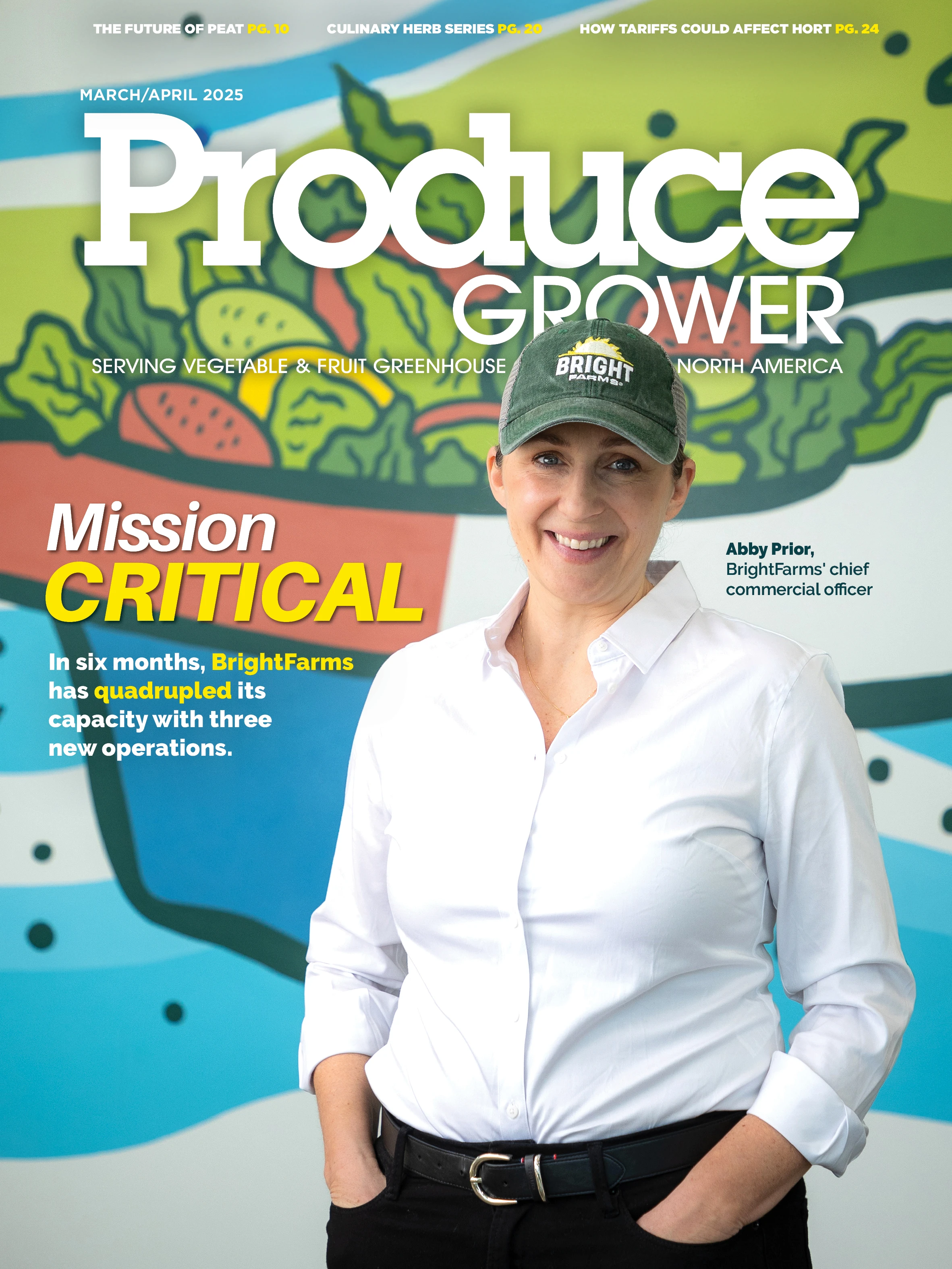
Explore the March/April 2025 Issue
Check out more from this issue and find your next story to read.
Latest from Produce Grower
- OHP expands sales team with new hire and internal promotion
- New internship data empowers horticulture employers
- Resource Innovation Institute and The Ohio State University launch first national CEA training certificate for design and construction professionals
- Farm Bill passes out of House Committee on Agriculture
- Gotham Greens celebrates 15-year anniversary in CEA industry
- [WATCH] Taking root: The green industry’s guide to successful internships
- The Growth Industry podcast Episode 10: State of the Horticulture Industry
- BM2 Automation