Editor's Note: This article originally appeared in the September/October 2025 print edition of Produce Grower under the headline “From farm kid to Ph.D..”

Growing up as a “farm kid,” Brandan Shur was pruning peach trees and picking Japanese beetles off his father’s crops — earning a nickel per bug — before he could even spell horticulture. Born on Long Island, where his dad ran an ornamental tree nursery, the family moved to Mount Airy, North Carolina, where his dad’s retirement hobby turned into a 2,000-tree orchard.
Shur was always involved in farming.
But by the time he reached high school, Shur decided that farm life was not for him.
“Maybe it was just me being a teenager, thinking I was too cool to farm,” Shur says. “But I didn’t want to go to college for agriculture.”
His father urged him to consider a different career — one that would be more economically stable and less weather-dependent than farming.
After taking a few English classes at a local community college, Shur was lured back into the fields as he enrolled in a winemaking trade school that offered classes in viticulture and enology. As the youngest student in the class at 17 — barely half the age of most of his classmates — Shur realized how much he loved the hands-on aspect of growing crops.
With encouragement from his viticulture professor, Shur applied to the horticulture program at North Carolina State University to continue his training. He landed a full-ride scholarship through the university’s Goodnight Scholars Program, bringing his so-called “stubborn horticulture journey” full circle as he returned to his plant-growing roots.
Finding his way to CEA
Just as Shur prepared to move to campus to begin his undergraduate studies, the COVID-19 pandemic hit, shifting classes online. As much as he loved his courses, like Plant Identification taught by Brian Jackson, Ph.D., he missed the in-person interaction and hands-on learning. Longing to “not just be a number on the screen,” Shur emailed Jackson requesting a one-on-one video call to discuss his goals and interests.
That led to an in-person meeting at Shur’s family peach farm, and Jackson ended up offering the young “farm kid” a position as an undergrad researcher in his Horticultural Substrates Lab.
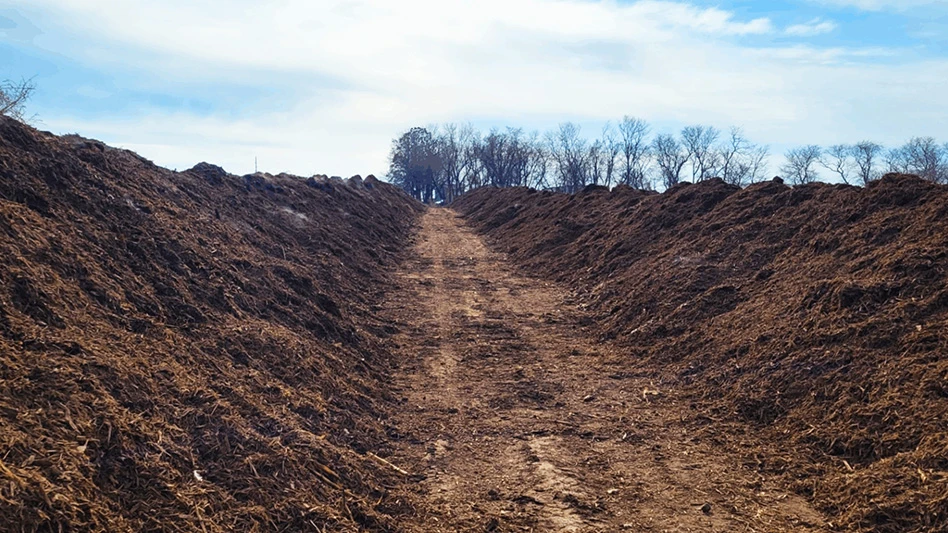
“I had no idea what substrates were,” Shur says. “But I quickly fell in love with it because we worked with dozens of different crops, from poinsettias to marigolds, tomatoes and Christmas trees. It got me excited because I love broadly learning as much as I can.”
Shur decided to keep working toward his master’s degree at NC State, and Jackson secured a grant for him to study strawberries and blueberries as his graduate research project. “Brian saved me from being just a small-farm peach kid and turned me into a researcher,” Shur says.
To help narrow Shur’s focus upon completing his master’s in May 2024, Jackson asked what aspects of horticulture he didn’t want to pursue.
“My exact words to him were, ‘I never want to do CEA,’ because it seemed so high-tech,’” recalls Shur, who just wanted to grow crops.
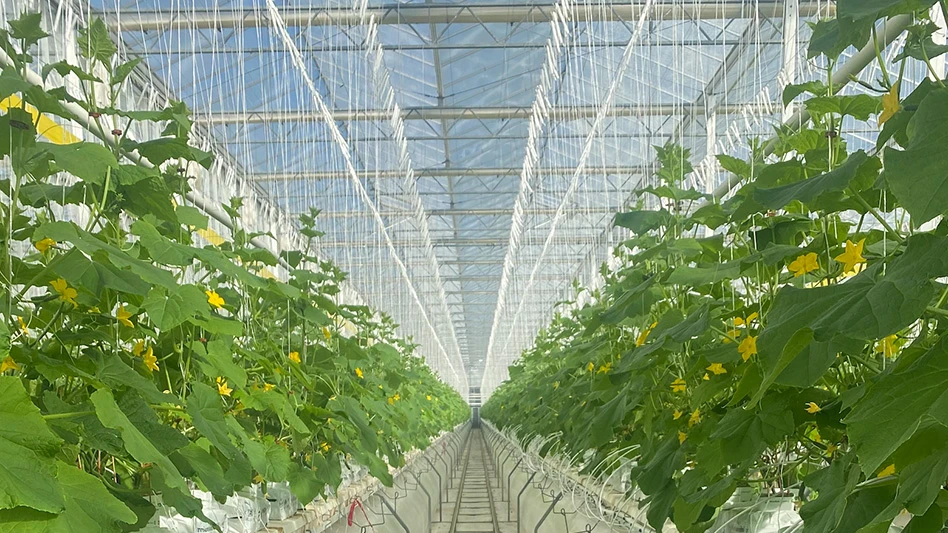
He didn’t realize that controlled environment agriculture included greenhouse growing, which was exactly what he wanted to do: produce food crops without the pests and early frosts that menaced his family farm.
Redirecting around this misconception, Jackson introduced Shur to Michael Evans, Ph.D., then-director of Virginia Tech’s School of Plant and Environmental Sciences. Now, Shur is pursuing his doctoral degree in horticultural science while conducting research in — of all places — Evans’ Controlled Environment Innovation Lab.


Expanding hydroponic crop options
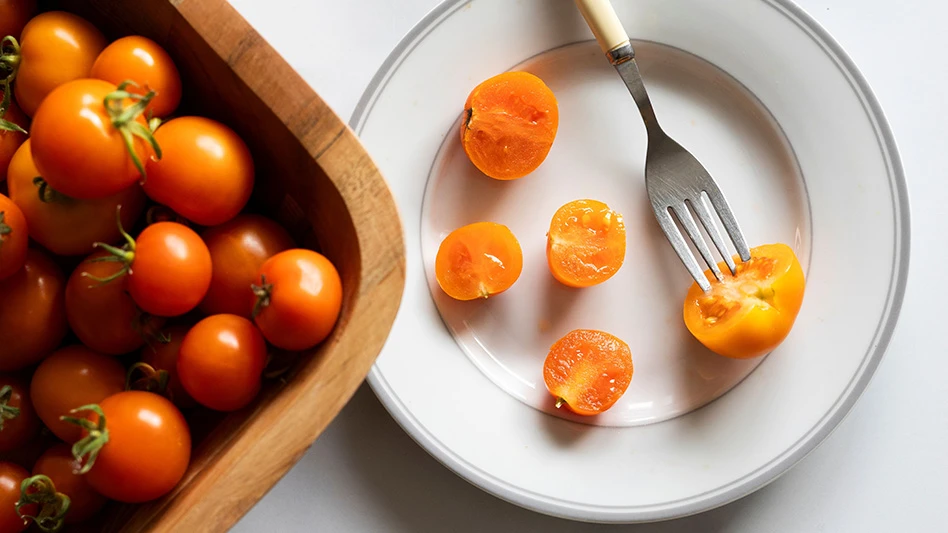
Under Evans’ guidance, Shur is researching the commercialization potential of micro-dwarf tomatoes in nutrient film technique (NFT) hydroponic systems.
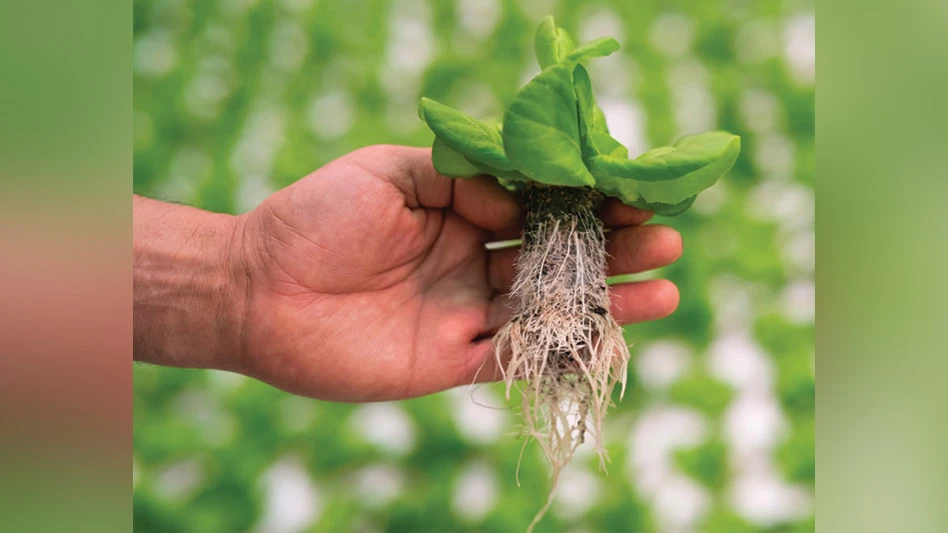
“We’re trying to expand the crop options for hydroponic growers,” Shur explains. “There are so many growers doing leafy greens, so we’re finding new crops that are easy to adapt to these same hydroponic systems, because it’s hard to convince a grower to put in a million dollars of new equipment to grow a new crop.”
Micro-dwarf tomatoes are a practical alternative, Shur says, because their compact size — similar to a head of lettuce — fits perfectly into hydroponic systems designed for leafy green production. Plus, they offer a fast turnaround time of a couple months from seed to harvest and an extremely high yield per unit area.
“We’re looking at, one, is it economically viable? Two, which cultivars will grow well for growers? And three, how can we make the fruit taste better?” Shur says. “The flavor is not very good, but to spend time breeding for flavor could take a decade. One benefit of CEA is that we have the capability to manipulate everything about how these plants are grown, which can improve the flavor. My work is looking at the nutritional manipulations we can do to stress these plants out to induce more sugars.”
Different types and amounts of fertilizers are Shur’s main variables for nutritional manipulation. Typically, he explains, raising the electrical conductivity (EC) levels increases sugars to improve flavor.
“The problem, though, is that the yield goes down very fast,” he says, “and growers are paid based on yield, not flavor.”
Micro-dwarf tomatoes offer a solution because they are determinate varieties, which produce a single crop — unlike most commercial tomato production, which leverages indeterminate varieties that continue fruiting throughout the season.
“When you stress out indeterminate tomatoes, the future successions of fruit are stressed out,” Shur explains. “We can stress out these micro-tomatoes by raising the EC level and keep yields high with great flavor, which could be a selling point for tomato growers.”


Looking forward
When he completes his doctoral studies and earns his Ph.D. in May 2027, Shur hopes to continue his career in soilless food production.
“I love finding ways to feed people consistently, where you’re not at the mercy of Mother Nature,” he says.
Early in his horticulture studies, Shur noticed a divide between academic researchers and growers in the industry.
“There’s always been this bridge, where the industry is five years ahead of what we’re even researching now,” he says.
In his career, Shur hopes to bridge this gap by working closely with growers to ensure that horticultural innovations are directly applicable to solving real problems.
The biggest problem he aims to solve is “finding ways to have higher yields with fewer inputs.” Recognizing that horticulture is “a wasteful industry” that tears through single-use plastics, single-use substrates and precious water resources, Shur’s overarching goal is to uncover more efficient and sustainable methods for greenhouse food production.
“I’d love to work toward shaping that future where we can be less wasteful,” he says.
To achieve these ambitious goals, Shur realizes that the misconceptions surrounding horticulture must be busted.
“People think it’s just farming,” he says. “(We need) to get rid of the idea that horticulture is just playing with plants. We’re plant scientists and engineers, and also detectives. We’re not just growing plants; we’re trying to solve problems and work toward food security.”
That will require experimentation and innovation — challenges that Shur believes his generation is ready to tackle.
“Our generation, we ask ‘why’ a lot more. We’re always wondering, ‘How can we make things better?’” he says. “Asking why leads to really good experimentation. While the old-school methods laid the foundation that we’re building on, hopefully my generation is taking the industry to a better place just by asking questions.”

Explore the September/October 2025 Issue
Check out more from this issue and find your next story to read.
Latest from Produce Grower
- OHP expands sales team with new hire and internal promotion
- New internship data empowers horticulture employers
- Resource Innovation Institute and The Ohio State University launch first national CEA training certificate for design and construction professionals
- Farm Bill passes out of House Committee on Agriculture
- Gotham Greens celebrates 15-year anniversary in CEA industry
- [WATCH] Taking root: The green industry’s guide to successful internships
- The Growth Industry podcast Episode 10: State of the Horticulture Industry
- BM2 Automation