Editor's Note: This article originally appeared in the January/February 2026 print edition of Produce Grower under the headline “Culinary herbs: Why consumers buy.”
Culinary herbs are complementary products, primarily used to enhance the flavor, nutrition and aesthetics of dishes. As growers and retailers know, there is a wide variety of herbs, with distinct forms, flavor intensities and nutritional value. Communicating these benefits to consumers can be challenging, especially the less visually apparent attributes, like how or where the plant was grown.
To fully appreciate the benefits of cooking with and consuming herbs, marketing efforts can communicate these attributes through point-of-sale materials such as labels, tags and signs.
However, updating promotional material requires money and employee time, so understanding what actually drives consumers to purchase herbs is important. Market research studies help identify trends, preferences and opportunities to enhance the effectiveness of marketing strategies.
As part of the Controlled Environment Agriculture Herb Extension and Research Base project, these results are from an online survey of U.S. consumers we conducted. The study, “U.S. Consumer Preferences for Culinary Herbs,” was part of a USDA National Institute of Food and Agriculture-funded project. Participants were part of a paid panel and were screened by asking, “Have you purchasedfresh culinary herbs in the past six months?” Only those who answered yes proceeded to the rest of the survey.
The findings are important for culinary herb growers and retailers as they consider future production and marketing messages to engage their customers better.
Buying habits
The study included 2,446 consumers who had purchased herbs in the previous six months who answered questions about fresh culinary herb purchasing behavior and use, perceptions and important attributes. Most participants bought fresh-cut herbs without roots (78% of the sample). Interestingly, there was equal distribution of customers buying potted fresh herbs (11%) or herbs with roots but no container (11%).
Even though all study participants purchased fresh herbs in the six months before data collection, 27% to 35% also grew their own in containers or in their gardens.
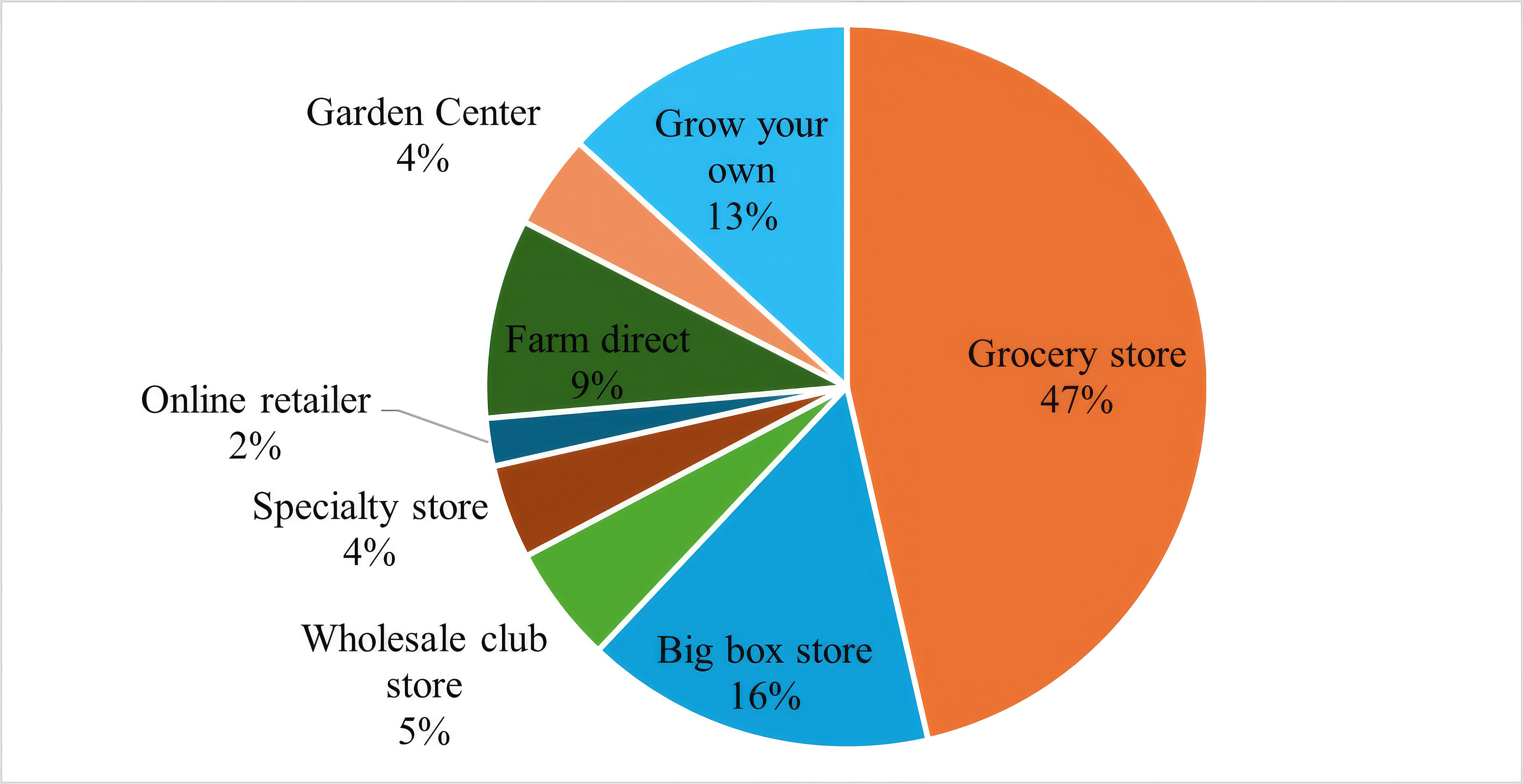
Once purchased, fresh herbs were used quickly. Participants reported using the herbs within three days of purchase. Nearly half (47%) bought fresh herbs at a grocery store, followed by big-box stores (16%), and 13% grew their own, with other retail outlets accounting for the remainder of fresh herb purchases (Figure 1). On average, customers spent $6.59 per purchase.
Maintaining herb availability in the retail channels consumers use can help improve product purchases by meeting customers where they expect to find and buy these products.
Suppose a firm is interested in partnering with other niche retailers. In that case, it can use marketing efforts (e.g., social media posts, advertisements) to educate customers about product availability and drive traffic to those locations.
Most popular uses for herbs
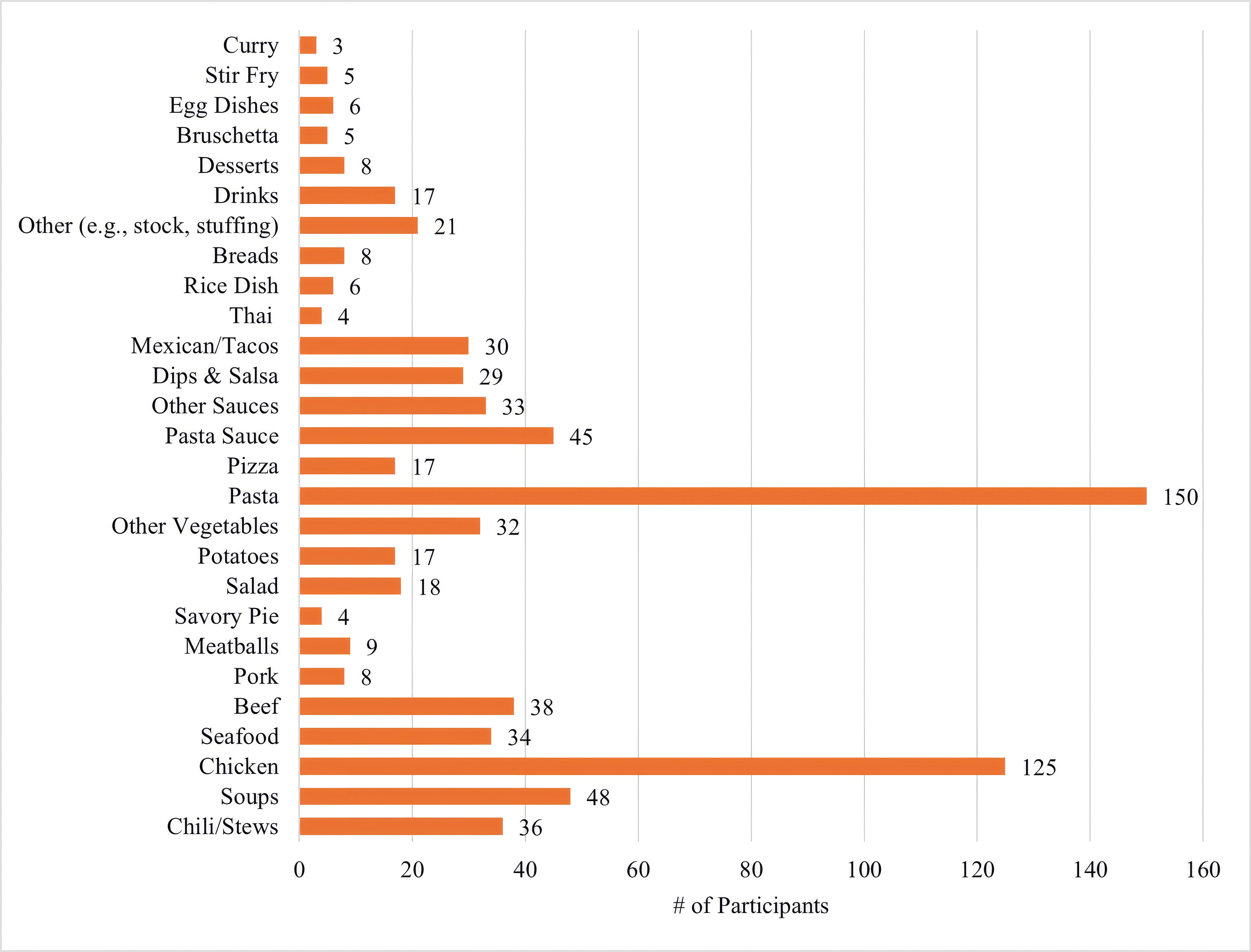
How do U.S. consumers use fresh herbs? Fresh herbs are mainly used in cooked dishes (61.8%), with some people (20.2%) using them in fresh dishes. Most of the consumers sampled (64%) had a favorite recipe that included fresh herbs, such as pastas (e.g., spaghetti, lasagna), followed by chicken dishes, soups, pasta sauces and beef dishes (Figure 2).
The majority of participants used herbs in savory dishes, with very few participants (1%) using them in sweet recipes such as desserts. Basil, parsley, cilantro and oregano were the most often used herbs in the favorite recipes.
Additional questions revealed that approximately 16% of participants used herbs in teas, 8% in mixed drinks, 6% for indoor decor, 7% for outdoor decor and 7% in oils. Only 3% of the herbs were preserved for later use. So, not all fresh herb purchases were destined for the plate.
This information can help structure marketing messages to highlight uses beyond cooking, such as infusing in teas and other drinks and to consider in alternative-use recipes. Knowing that consumers mainly use fresh herbs in cooked dishes, but also use them in other ways, can help marketers direct customers to additional uses and recipes while inspiring more purchases.
Consider QR codes with links to popular recipes using fresh herbs and in-store point-of-sale information that can help consumers identify fun ways to use herbs in their lives.
Fresh and familiar is best
When asked how much they agreed/disagreed with the statement, “Fresh herbs are tastier than dried options,” 82% either agreed or strongly agreed.
Consumers are clearly buying fresh herbs to make their food taste better.
Participants indicated the importance of different factors when purchasing fresh herbs (1 = unimportant to 5 = very important). Herbs grown under high food-safety conditions and without pesticides had the highest average score (4.2 of 5.0), closely followed by those grown with a harvest date shown and grown locally (Figure 3).
Numerous studies underscore the importance of locally grown products to consumers. If the retailer is sourcing fresh, locally grown herbs, communicating that information at the point of sale would likely generate considerable added value.
When considering the harvest date ratings, having a harvest date, purchase-by date or use-by date may help consumers determine freshness, which is an indirect indication of quality. Fresher products are perceived as better products.
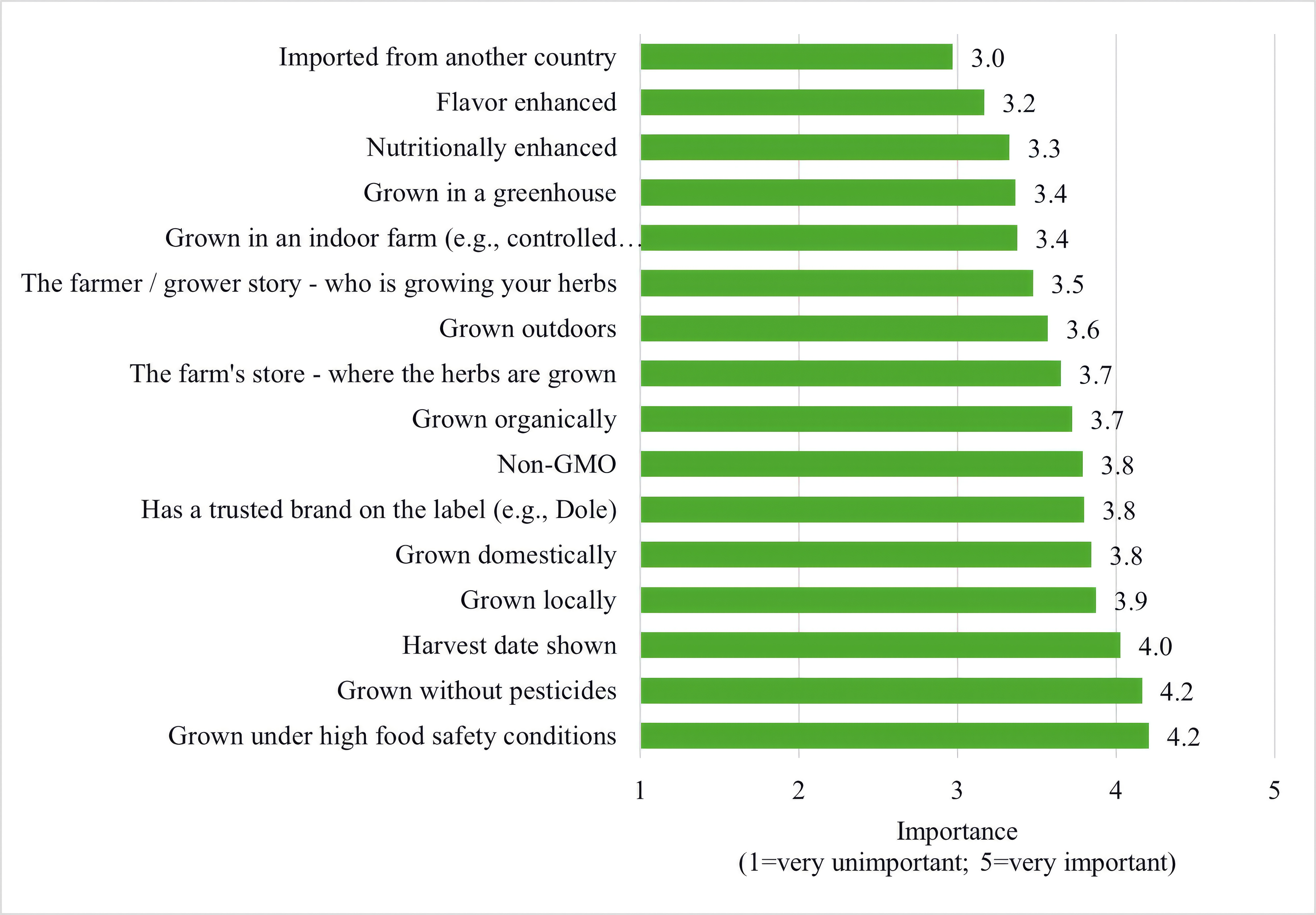
Less important attributes included being imported from another country, flavor or nutritionally enhanced and growing location (such as a greenhouse or indoor farm). Each of these attributes was either neutral (a 3 rating) or slightly important (greater than a 3 rating), but not to the level of importance of the previously mentioned attributes.
Participants seemed to want to buy fresh produce they already knew and weren’t too adventurous in seeking out new herbs or produce. While 75% somewhat or strongly disagreed with the statement, “I prefer to use fresh produce I am used to,” only 39% somewhat or strongly agreed with the statement, “I like to try the most unusual fresh produce, even if I am not sure if I would like them.” Then, 47% somewhat or strongly agreed with the statement, “I am eager to know what kind of fresh produce other people use.”
There is some interest in trying different kinds of herbs and produce. Still, marketers could help consumers try something new by providing or demonstrating culinary and alternative uses.
Cooked dishes with new herbs, drinks or decorations that showcase their use would go a long way toward helping consumers make that subsequent purchase.
This study provides growers and retailers with a snapshot of how consumers use fresh herbs and what matters to them. Positioning the product at retailers frequented by customers where they expect to buy herbs is the first step toward improving product availability. In the case of herbs, this included grocery stores and big-box stores. Alternative retailers are also viable options but may require additional advertising.
Marketers can elevate the customer experience by showing consumers the information they need and suggesting new or alternative uses for fresh herbs. Each additional use can generate extra value for the customer and create more purchasing opportunities.
Explore the January/February 2026 Issue
Check out more from this issue and find your next story to read.
Latest from Produce Grower
- The Growth Industry podcast Episode 10: State of the Horticulture Industry
- Bimi Baby Broccoli partners with Cal-Organic Farms
- Millennium Pacific Greenhouses launches California Grown Cucumber Program
- Scientists develop vitamin A-enriched tomato to fight global deficiency
- UTIA and UT Knoxville research teams will develop automated compost monitoring system
- [WATCH] Taking root: The green industry’s guide to successful internships
- [WATCH] Advances in growing media for CEA production
- Award winners announced for 2026 PHS Philadelphia Flower Show