Editor's Note: This article originally appeared in the January/February 2026 print edition of Produce Grower under the headline “Heat becomes harvest.”
As CEA stakeholders push to scale and states seek to spur business investment, the missing link may be climate-smart symbiotic partnerships that span multiple industries.
In a recent study, the Resource Innovation Institute declared that co-locating data centers with multiple high-tech greenhouses and other complementary industrial firms is a feasible and strategic way to support resource efficiency, job creation and economic development.
The study specifically examined co-location opportunities in southern Virginia and RII presented the report to the Institute for Advanced Learning and Research, as well as GO Virginia Region 3, a state-funded economic development initiative charged with creating high-wage jobs and diversifying Virginia’s economy.
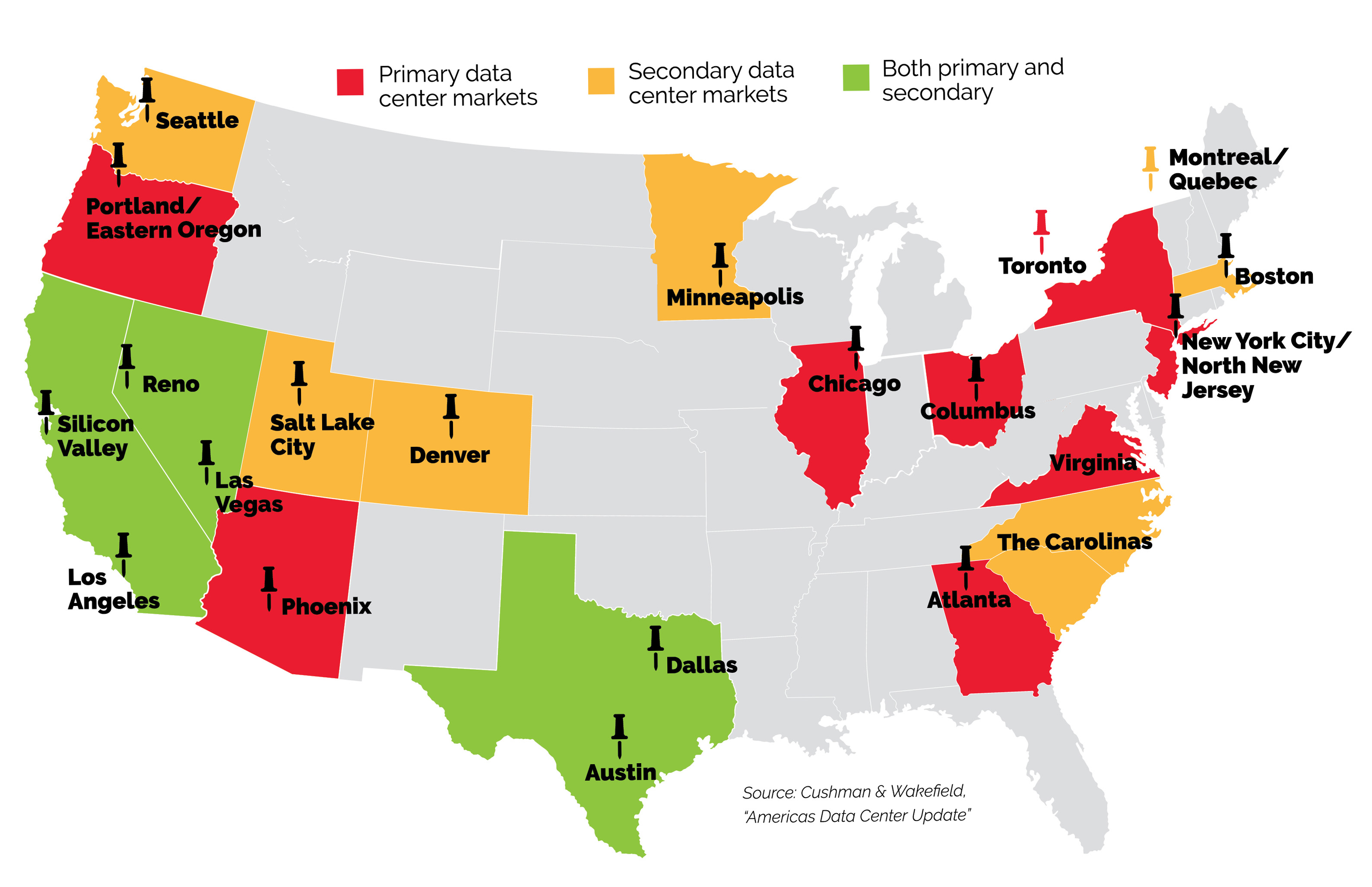
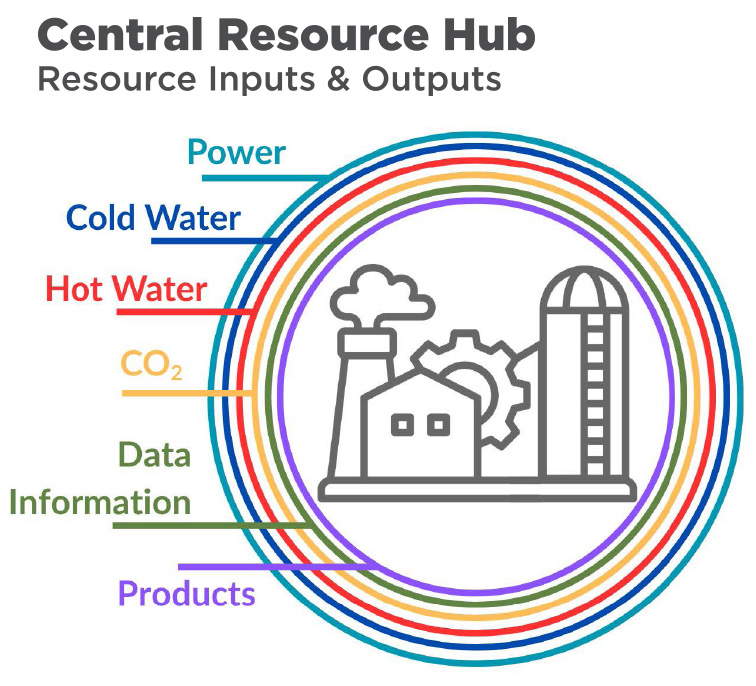
Virginia hosts the largest data center market in the world and is home to 35% of all known hyperscale data centers worldwide, according to the Virginia Economic Development Partnership. The study presents a vision for clustered development zones where centers and greenhouses share infrastructure, such as heat, CO₂ and energy, to reduce costs and improve efficiency.
The Netherlands and Canada employ this model, which offers a more competitive development plan compared to isolated facilities, says Derek Smith, executive director of the Resource Innovation Institute and co-author of the report.
“As data infrastructure expands and CEA continues to gain traction in Virginia, there’s a unique opportunity to plan ahead for smart, synergistic development,” Smith adds. “We’re excited to offer this analysis as a roadmap for how Virginia can lead the nation in co-location innovation.”
According to global management consulting firm McKinsey & Company, businesses will invest almost $7 trillion in capital on data center infrastructure globally by 2030. More than 40% of this spending will be invested in the United States. McKinsey’s analysis also revealed that data center demand in the U.S. could grow by 20% to 25% per year during the next four years.
States that can “effectively plan, manage and mitigate the risks of data center growth stand to unlock millions, perhaps even billions, of dollars in direct and indirect growth,” the company wrote in its report titled “The data center balance: How U.S. states can navigate the opportunities and challenges.”
Challenges and opportunities of co-locating CEA and data centers
RII reports that modern data centers convert 33% to 42% of consumed power into waste heat, typically ranging from 45 to 55° C (113 to 131° F), “which is conventionally rejected to the atmosphere despite representing a substantial energy resource.”
The report also indicated that “fully utilizing waste heat from Virginia’s existing data centers could support 6,000 to 8,500 acres of high-tech greenhouse operations, potentially meeting 80 to 120% of the state’s fresh tomato demand while offsetting 370 to 495 million cubic meters of natural gas annually.”
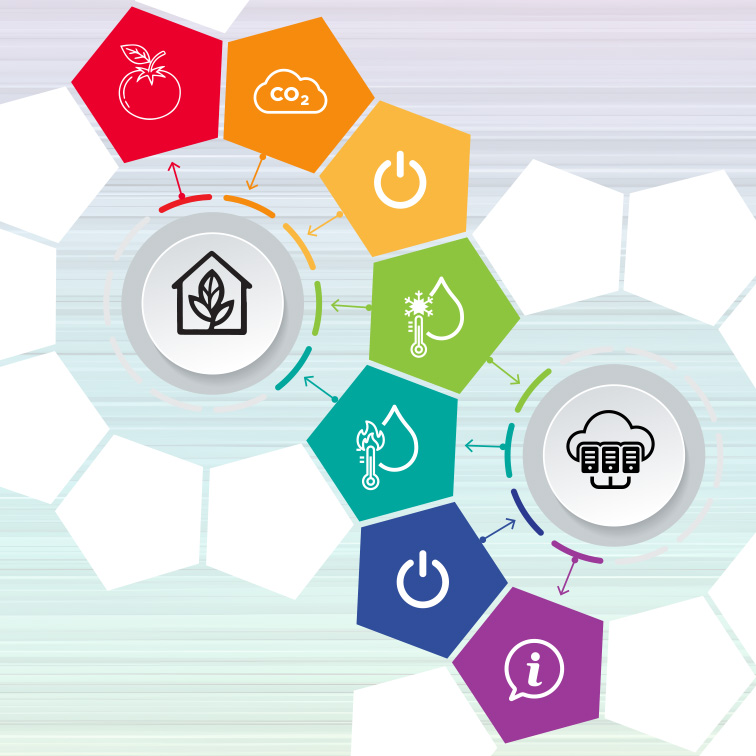
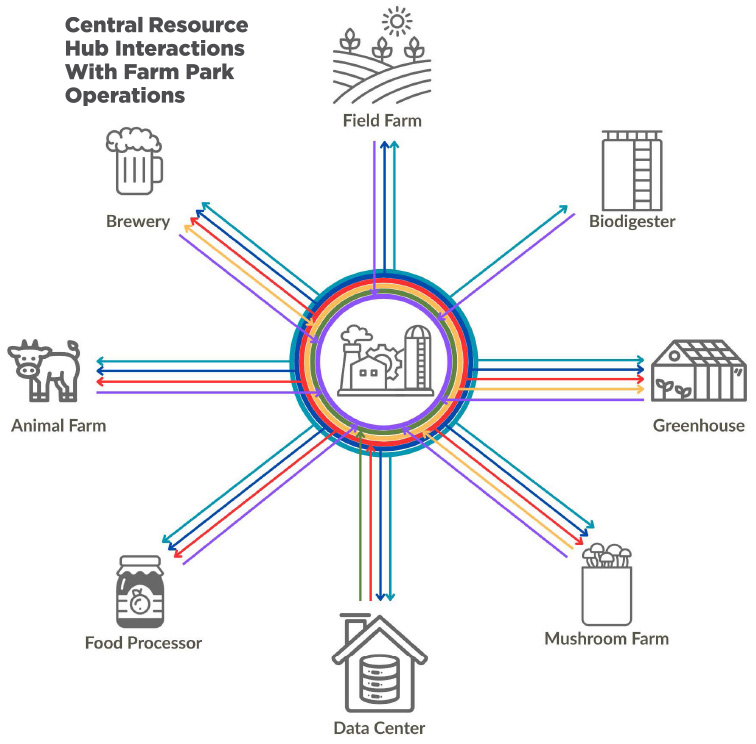
With Virginia’s significant investments in CEA and data center industries, the report focused on these enterprises as the anchors in a multi-business model RII dubbed the Farm Park. The Farm Park would use a combined heat and power (CHP) microgrid to provide cooling of the data center water loop while providing power, heating, cooling and CO2 enrichment for the greenhouse and other co-located businesses (such as a brewery benefiting from CO2 loops).
Multiple greenhouses and indoor farms would benefit from the reduced cost of production and the advantage of co-located support infrastructure, such as packers, cold storage, warehousing and transportation. The report identifies other industry sectors including food retailers that could establish distribution and logistics centers on site.
HVAC, equipment and robotics providers could co-locate to win service contracts with the anchor tenants. IT companies requiring powerful computing with low latency could tap into the service fiber loop network leased by the data center.
“This model would generate local, regional and state economic multipliers through job creation, diversifying the local and regional economies and taking advantage of existing economic and workforce development investment,” according to the RII report.
Developing clear technical standards and integration points that preserve operational independence for all facilities is essential. The report suggests standardized specifications for “CEA-ready” data centers.
An unnamed county administrator who was interviewed for the report said government officials must clearly explain the “return back for the community.”
While greenhouses may not be a large tax generator, CEA offers strong job creation potential, with each 65-acre greenhouse supporting 140 to 270 jobs, which is significantly more than a typical data center, RII reports.
State and regional economic impact studies are encouraged “to prepare in support of a favorable local land use outcome,” the report states.
The report emphasizes that implementing this type of integrated system “requires substantial investment and regulatory support from the public sector to augment private investment. A CHP plant, hot-water distribution network and utility loops must be built. Institutional coordination is needed among landowners, developers, utilities and local government.”
Local, regional and state government agencies can provide financial incentives, as well as long-term planning coordination, standardization, regulatory flexibility and project validation that private entities struggle to achieve independently, RII reports. One participant noted that public/private investment Farm Parks are “the future of CEA.”
Co-locating data centers and greenhouses is both feasible and strategic, yet there are challenges that need to be overcome, Smith says.
A demonstration site, or a set of pilots, “would provide an excellent testbed” for determining solutions related to:
- Siting: site assessment and optimization, building and energy code alignment, California Environmental Quality Act considerations, engagement of local jurisdictions and stakeholders.
- Economic and fiscal analysis: estimation of economic development, job creation, food production and tax revenue potential.
- Central resource hub planning: CHP system setup, engineering analysis (matchmaking for waste heat, CO2, water), biomass processing integration, utility engagement, grid interconnection and flexibility.
- Public-private financial model: determining the catalytic public investment that unlocks private investment, identifying funding sources, positioning the Farm Park for tenant recruitment.
- Industry matchmaking: recruitment of developers, greenhouse producers, and other park tenants.
- Workforce development: assessment of workforce needs and capacity of training partners, geared toward design and construction professionals as well as greenhouse maintenance teams.
“We see RII’s role as working with agencies and other stakeholders to develop solutions to these and other steps in the process of developing a Farm Park,” Smith says.
Farm Park development and scaling CEA boils down to economics. Getting capital to return to the CEA market requires de-risking it, he explains.
“Getting the public sector to play the right role in the development of the Farm Park — in terms of infrastructure and economics — is a solid path to de-risking,” Smith says.
Explore the January/February 2026 Issue
Check out more from this issue and find your next story to read.
Latest from Produce Grower
- The Growth Industry podcast Episode 10: State of the Horticulture Industry
- Bimi Baby Broccoli partners with Cal-Organic Farms
- Millennium Pacific Greenhouses launches California Grown Cucumber Program
- Scientists develop vitamin A-enriched tomato to fight global deficiency
- UTIA and UT Knoxville research teams will develop automated compost monitoring system
- [WATCH] Taking root: The green industry’s guide to successful internships
- [WATCH] Advances in growing media for CEA production
- Award winners announced for 2026 PHS Philadelphia Flower Show