Editor's Note: This article originally appeared in the January/February 2026 print edition of Produce Grower under the headline “Questions with Craig Carlson.”

Craig Carlson, the president & CEO of Carlson Produce Consulting, is a seasoned industry leader with more than 30 years of experience in the fresh foods sector.
A strategy consultant who specializes in commercializing CEA and field-grown supply chains, Carlson utilizes decades of senior retail and food service experience leading the produce operations for companies like Walmart and US Foods and working with clients on go-to-market strategies that include sales, customer support, marketing and other key functions of commercial success.
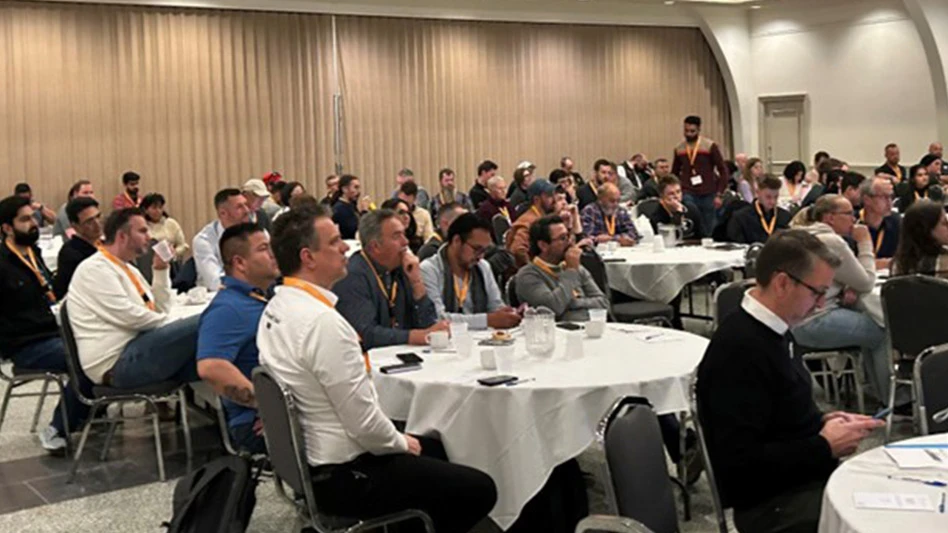
At Indoor Ag-Con 2026, Carlson is part of a panel presentation, “The Price Squeeze: Navigating Cost, Competition and Commoditization in CEA.”
Carlson chatted with Produce Grower to share a few insights into CEA pricing and supply chains.
Produce Grower: What are the primary cost drivers when it comes to pricing?
Craig Carlson: Right now, the biggest issue is the moving target: tariffs. How do you understand how they’re going to impact your operation, how do you quantify them and how are you going to put together a strategy? That’s the biggest component. Other components are your input costs — your fertilizer, your seeds — which could be impacted by tariffs.
PG: How do technological investments in production factor into price?
CC: If AI can help maximize your yield or improve your yield in a way that improves your revenue without impacting your costs, that’s huge. What you tend to find is that, with AI, it doesn’t as much impact the upper ranges of your production, but what it impacts is the variability, helps minimize the low ranges of your production, and that’s where the gains are.
PG: How does proximity to distribution centers or stores impact pricing?
CC: There’s a lot of different strategies that are happening here. Sometimes the CEA operation is delivering to stores directly. Sometimes the CEA operation is delivering straight to the distribution center. There’s a number of different strategies that are happening, but it seems like the sweet spot is distributing from about a 300-mile radius for an operation of large size to work the most effectively from a freight efficiency standpoint.
PG: Are there any pricing advantages you can identify within local or regional supply chain programs?
CC: Well, the most obvious one is the fact that your supply chain is much fresher, and you can get product on the shelf in 24 hours if you plan your supply chain right. You might have a problem with someone’s product that’s nine days old, and you’re out there only one day old.
PG: What makes retailers willing to pay possible premiums for CEA produce?
CC: It depends. Not everybody’s the same, but (operations) have to be close to the delivered prices of California (field-grown) product, and then you have the advantages of being fresher because you’re local.
Explore the January/February 2026 Issue
Check out more from this issue and find your next story to read.
Latest from Produce Grower
- The Growth Industry podcast Episode 10: State of the Horticulture Industry
- Bimi Baby Broccoli partners with Cal-Organic Farms
- Millennium Pacific Greenhouses launches California Grown Cucumber Program
- Scientists develop vitamin A-enriched tomato to fight global deficiency
- UTIA and UT Knoxville research teams will develop automated compost monitoring system
- [WATCH] Taking root: The green industry’s guide to successful internships
- [WATCH] Advances in growing media for CEA production
- Award winners announced for 2026 PHS Philadelphia Flower Show