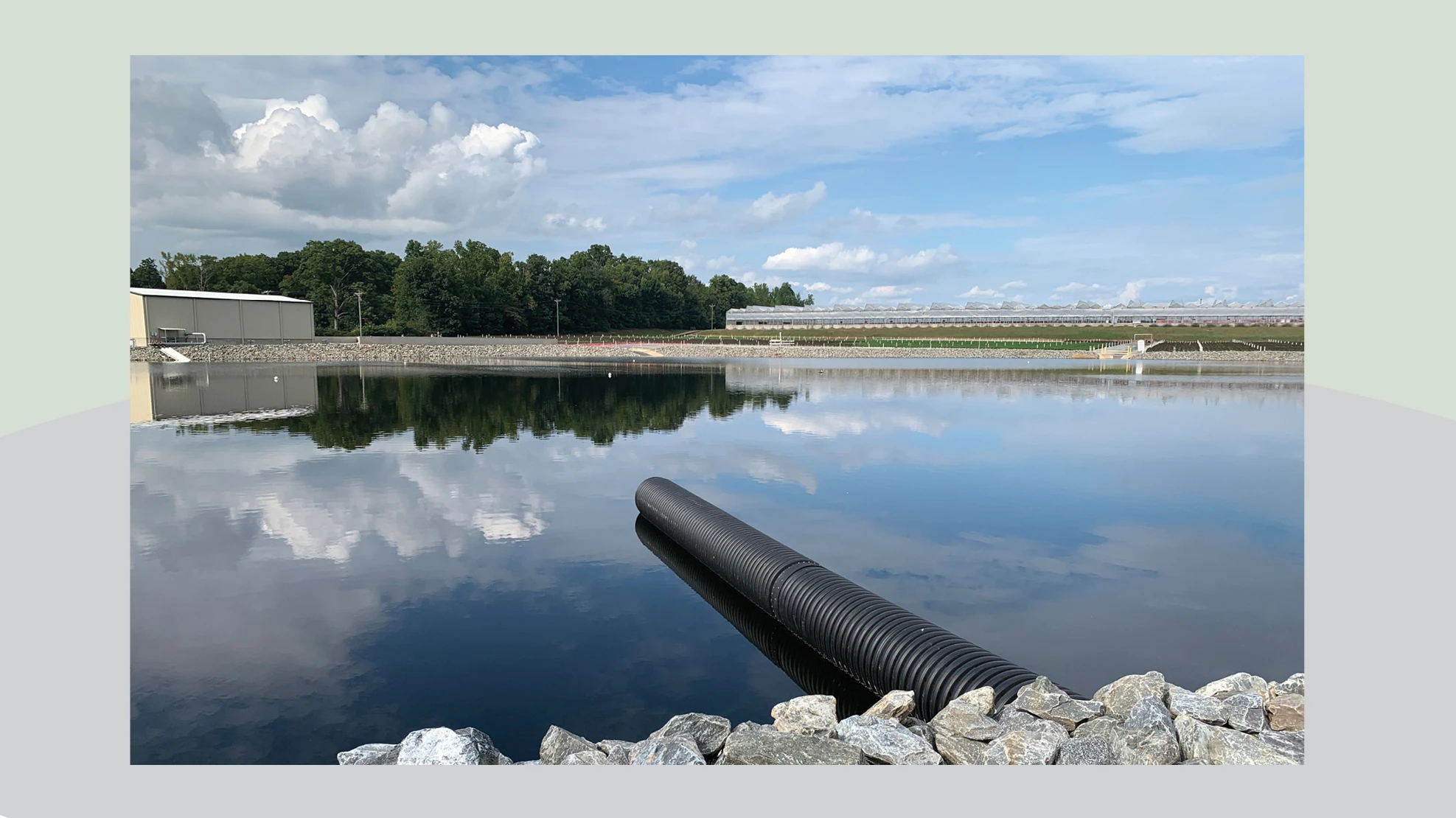

A retention pond can be a good source of water for your greenhouse operation. It is basically a container that provides storage. Water is removed for the crops and replaced from a source such as a stream or runoff from an impervious surface such as the greenhouse roof. The retention pond needs to be designed for the water supply available, where it can be located and where the overflow runoff will go.
Retention ponds are usually a supplemental source to the main water supply, as the amount of water available can be quite variable from season to season. Rainfall, stream flow or groundwater will also vary from year to year.
Besides irrigation water, a retention pond can capture rainfall runoff from the greenhouses to help reduce property damage. It can also provide fire protection for the area, reducing insurance costs.
A good place to get an initial evaluation when considering the potential for a retention pond is the USDA Natural Resources Conservation Service. They may be able to offer technical and financial assistance through the Environmental Quality Incentives Program.
The following are some considerations to help you make an informed decision.
Water use
Use rates in greenhouses are related to transpiration and evaporation. For most areas of the U.S., a maximum use rate is about 0.4 inches per day on the warmest days. This translates into about 0.25 gallons per square foot of growing area per day. In greenhouses, use rates can exceed this at times, depending on air movement, container size, container color and the temperature inside the greenhouse.
Diversion regulations
Water rights have been passed in many states that limit the amount of water that can be used without obtaining a permit. Digging a pond may require a permit. An application for a diversion is expensive and may take up to a year to obtain. Annual reports of water usage are required.
Water source location
The distance and elevation of the water source in relation to the pond and greenhouses should be considered. The amount of trenching needed and the location of the pump can add to the cost of the installation. You should know the total cost of pumping water before you decide if the source is viable.
Water source yield
Surface water sources are dependent on runoff from adjacent land or from groundwater springs. These are dependent on rainfall rates that vary from year to year. Rainfall rates are highest during the rainy season or during snow melt. Yields of larger streams may be available from U.S. Geological Service data.
Significant quantities of water can be collected from roof runoff. A 1-inch rainfall on an acre of greenhouse amounts to 27,100 gallons. A common yield is about 65%, with losses due to evaporation, wind, leakage of the piping system and diversion of the first few minutes of the rainfall to remove debris. To calculate the amount that can be collected, multiply the footprint of the greenhouse in square feet by 0.4. This will give you an approximate quantity in gallons from an acre-inch rainfall.
Water retention
Leakage from a pond can be a problem. Ideally, it should have a clay bottom. If the soil composition doesn’t include clay, that material may have to be purchased and spread across the bottom. An alternative is to install a polyvinyl plastic liner that retains the water.

Maintenance
In order for the pond to function properly, periodic inspection and maintenance are required. Inspect for leaks, animal intrusion and algae and weed growth. Algae and weeds can be controlled by chemical sprays. Plant growth around the edges requires occasional mowing. Fencing may be needed to keep animals and children out.
Dry hydrant
Water is the most valuable resource in a fire. Having a good water supply and well-maintained access for the fire equipment is very important to be able to limit the extent of damage. Installation of a dry hydrant can shorten the time it takes to get water to the fire.
Water quality
Surface water is subject to contamination from a number of sources, such as sediment, chemicals and plant growth. Tests for total suspended solids, volatile suspended solids, total dissolved solids, pH, conductivity and some of the key elements should be the first step in evaluating a source of surface water.
Sediment in runoff from adjacent land can clog pumps, piping and nozzles. It is easiest to remove this with self-flushing filters. High light levels and temperature, along with carbon dioxide, nitrogen, phosphorus and trace elements, influence the development of algae. Skimming, raking, algae eaters or chemical treatment may be needed. Slime developed from hydrogen sulfides, iron bacteria or manganese present in the water can usually be controlled by aeration. Protozoans, zooplankton, small crustaceans and fish can create blockages in irrigation pipes and nozzles. Water fleas and water mites are also present at certain times during the year; they are managed with filtration.
With water availability becoming critical in many areas of the U.S., adding a pond to your operation may be a good investment.
Latest from Produce Grower
- OHP expands sales team with new hire and internal promotion
- New internship data empowers horticulture employers
- Resource Innovation Institute and The Ohio State University launch first national CEA training certificate for design and construction professionals
- Farm Bill passes out of House Committee on Agriculture
- Gotham Greens celebrates 15-year anniversary in CEA industry
- [WATCH] Taking root: The green industry’s guide to successful internships
- The Growth Industry podcast Episode 10: State of the Horticulture Industry
- BM2 Automation