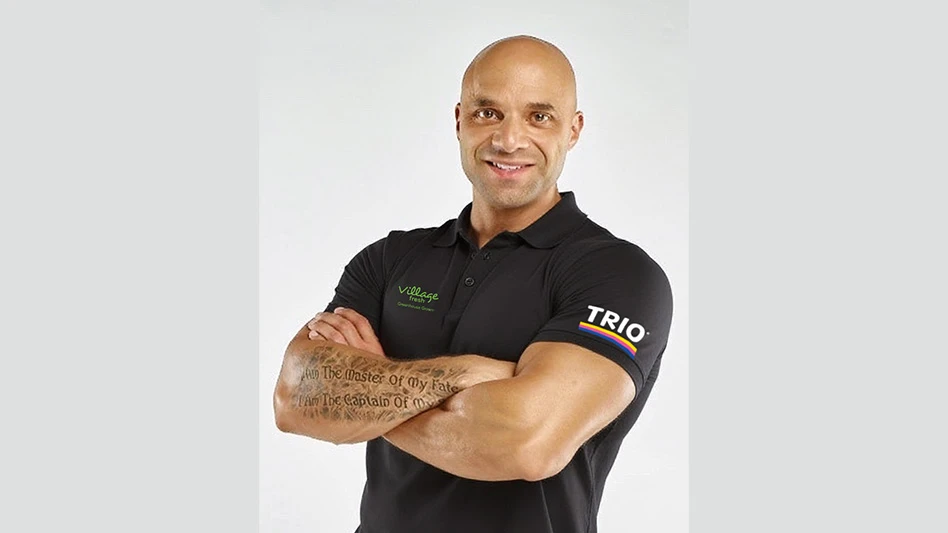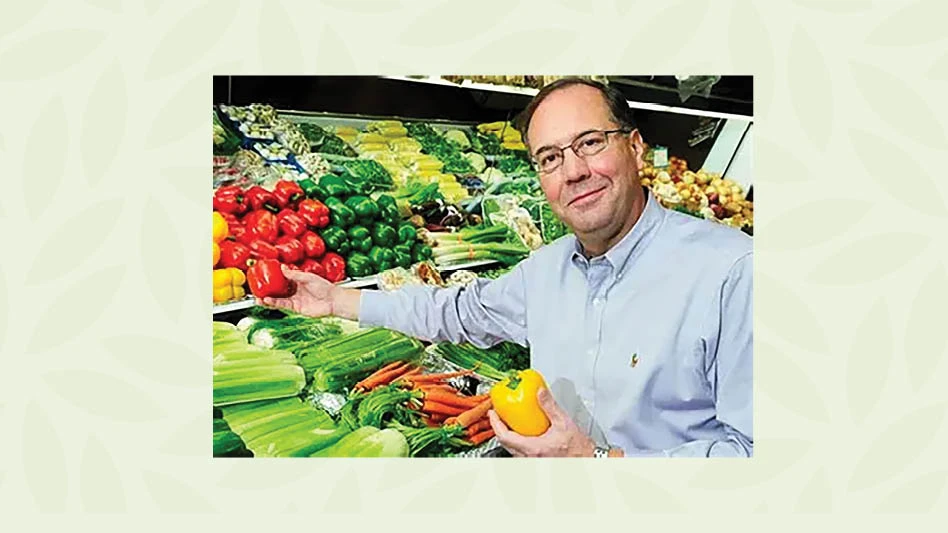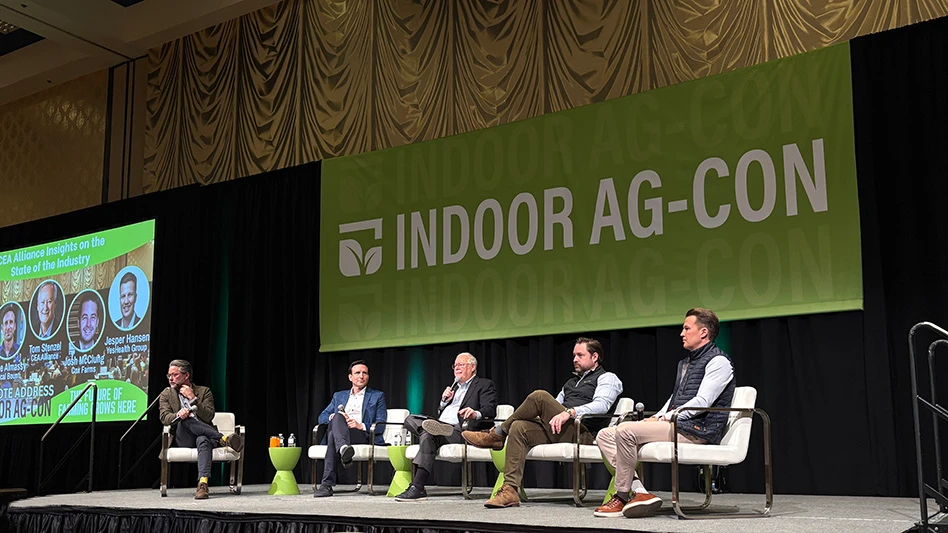
Indoor Ag-Con kicked off on Feb. 11 with a keynote panel featuring Aaron Fields, CEO of Campo Caribe; Dane Almassy, CCO, Local Bounti; Jesper Hansen, CCO, YesHealth Group; Josh McClung, COO, Cox Farms; with moderation from CEA Alliance Executive Director Tom Stenzel.
Stenzel opened with a simple theme: optimism. And, while the industry leaders offered positive insights into the future of CEA, their discussions maintained a level of “critical optimism,” as the panelists reckoned honestly with issues including high CapEx, a lack of communication with consumers and retailers and a few words of caution regarding overspending on technology and instead taking a “sensible tech” approach.
On the other side of the coin, Fields emphasized opportunities for CEA operations in regions that have historically relied on imported food, e.g. Puerto Rico where his Campo Caribe facility is based.
Hansen discussed a climate-related need for vertical farming, as he foresees more field operations moving to or adding indoor operations, which tied into Almassy’s theory that hybrid greenhouse/vertical farm operations will become more standard in the coming years.
Here are 4 key takeaways from the panel:
1. Quality and communication is key.
The panelists agreed that consumers, and even retailers, often misunderstand the value of CEA crops.
“We carry part of the blame for the lack of adoption of our product and process,” Hansen stated. “While field growers are great at what they do, [CEA] is quite inexperienced still, and building retail relationships can take a lot of time.”
Panelists seemed to agree that the industry needs to bolster communication, citing freshness, proximity and quality of CEA products as key components adding value for retailers and consumers.
2. We don’t need a Ferrari.
With so much focus on technology that could facilitate indoor production in the early days of CEA, some of the most important aspects of running a produce business got lost.
“We’re farmers. We are not a tech industry, and early CEA players didn’t understand that,” Hansen said.
And that means prioritizing delivering what you say you’re going to deliver to retailer customers, Almassy added.
“Service me on time, service me in full, and service me with high-quality product,” Almassy said.
Becoming a household name in any industry means creating a household product.
“We need to be a Ford F-150, not a Formula-1 racecar,” McClung explained, adding that the industry should focus on balancing innovation with critically important solutions.
That means scaling back unnecessary technology that increases CapEx, high-tech proprietary systems and focusing on reliable means of bolstering the bottom line.
Almassy referred to hybrid operations as part of the solution, where plants begin their life in a vertical farm before moving to the greenhouse as “teenagers.” This process, he claims, provides better shelf life and can maximize flavor.
3. Let’s make something that lasts.
As the conversation shifted away from tech, McClung brought up what he called “generational durability.” The question: What is the next opportunity for growth in CEA that will sustain itself over lifetimes?
Fields was primed and ready to mention his Puerto Rican operation, still in its infancy at the time of the conference, which aims to establish a stable vertical farming operation, retail relationships and new supply chains in a region where imported produce takes up the bulk of the retail market.
“There is tremendous room for growth related to regional availability,” Almassy agreed.
Fields described the cultural value of producing regionally, as well.
“Four months alone in Puerto Rico has brought pride to the people who now get to cultivate something local that wasn’t there before,” he shared.
Other opportunities exist in strawberries and exploring other crops that could be successfully produced under cover.
4. AI is a solution, not a savior.
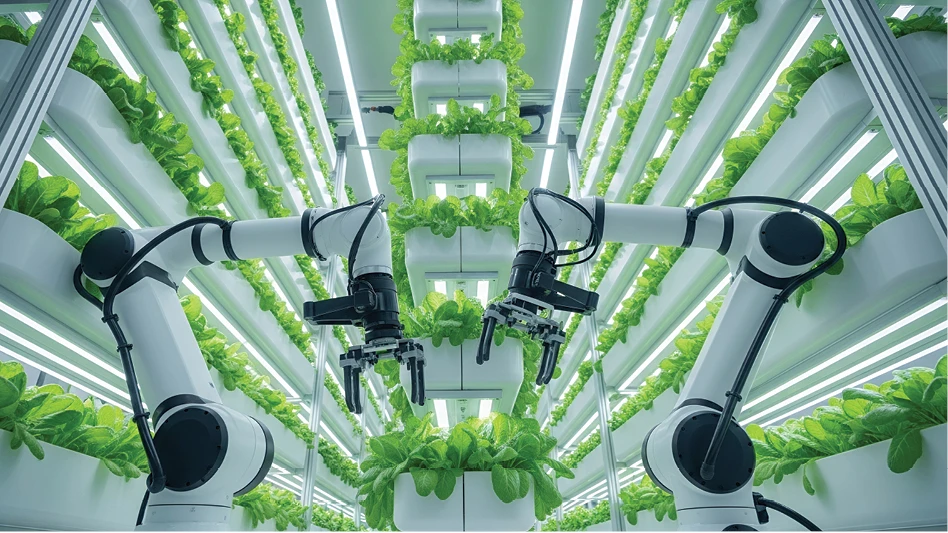
As AI becomes more prevalent in myriad industries, vertical farms are identifying its purpose, too. McClung called it an additive, not a total fix.
“If you come to me and say you can take over my entire operation with AI tomorrow, I don’t want to talk to you,” he said.
But, that doesn’t mean he’s eschewing its value altogether, adding that he believes in many of its promises.
“Our philosophy is to find specific usages,” McClung says.
Despite a fair share of cautionary tales, the panel maintained an air of hopeful determination, as some attendees agreed that it felt inspiring and realistic to admit the industry’s faults and provide clear insight into a prosperous path forward.
According to Produce Grower columnist Eric W. Stein, Ph.D., “It was refreshing. They’re not just blowing smoke.”
For even more coverage of Indoor Ag-Con, follow us on Instagram, Facebook and LinkedIn. Sign up for our newsletter to keep up with the latest in industry and supplier news, Q&As and compelling stories within CEA.
Latest from Produce Grower
- Indoor Ag-Con 2026 guide
- Mondi Products launches Avara Technology
- IUNU and Priva partner on yield forecasting for greenhouse growers
- Biotalys and 21st.BIO partner on biocontrol production
- The Growth Industry Episode 9: IPPS International Tour preview with Brie Arthur and Liz Erickson
- Virginia Tech's Michael Evans talks specialty crops and differentiation ahead of Indoor Ag-Con panel
- Questions with Karl Kolb
- New American Floral Endowment scholarship supports global floriculture research