Editor's Note: This article originally appeared in the January/February 2026 print edition of Produce Grower under the headline “Questions with Karl Kolb.”

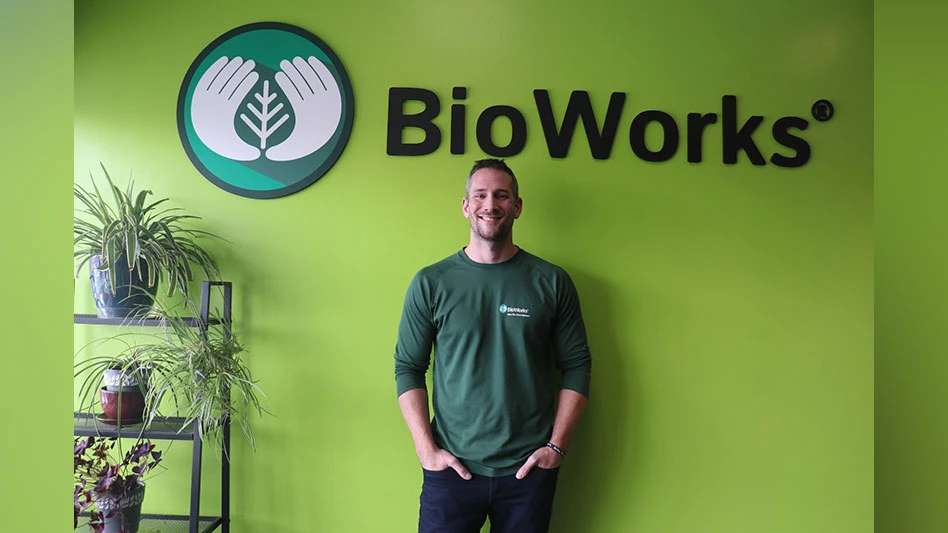
Karl Kolb is president of Ceres University and owner of four ISO-accredited companies, including the High Sierra Group with Ceres University, HSG/AME Certified Laboratories, Ceres Certifications International and High Sierra Chemicals.
With more than 30 years of industry expertise as a microbiologist and quality assurance professional, Kolb will discuss food safety as a competitive differentiator and the processes behind building a robust, certification-ready food safety program at Indoor Ag-Con.
Here are a few insights into food safety ahead of Kolb’s upcoming panel, “From Compliance to Competitive Advantage: Designing a Strong Food Safety Framework.”
Produce Grower: What is the foundation of a good food safety strategy?
Karl Kolb: Following the food safety scheme you've chosen for your organization. The food safety scheme encompasses all the requirements needed for timing and organization and all of the particular standards from the back door to the front door. Follow the scheme, and you will accomplish your goals.
PG: What does a good food safety scheme look like?
KK: There’s literally hundreds of food safety schemes, and they’re all designed for different types of organizations. Much like walking into a shoe store, you pick the size and the type of shoe you want. So, given whatever you’re doing in your organization — processing, blending, packing, a host of things — and the size and who you’re serving to, you pick the particular food safety scheme that fits you the best.
PG: How can growers mitigate risk regarding food safety?
KK: HACCP is the core document of all food safety programs. The acronym stands for Hazard Analysis Critical Control Points. So, as you assess your entire organization from front door to back door, you determine where the risk is. And given that risk, you do one of three things: you mitigate it, you control it or you eliminate it. If you can’t eliminate it, you attempt to control it. If you can’t control it, you attempt to mitigate it, but that risk remains.
PG: What is the importance of internal auditing?
KK: It’s critical. Internal auditing ensures that throughout the year, you’re following every single standard in your food safety scheme and taking corrective actions.
PG: Have there been any big changes to food safety legislation or policy that might change an organization’s practices?
KK: Probably the biggest impact on the industry this year is the brand new PCQI (Preventive Controls Qualified Individual) program version 2.0. And every person in the industry should take the course, because it applies to everything an organization does from A to Z.
Explore the January/February 2026 Issue
Check out more from this issue and find your next story to read.
Latest from Produce Grower
- The Growth Industry podcast Episode 10: State of the Horticulture Industry
- Bimi Baby Broccoli partners with Cal-Organic Farms
- Millennium Pacific Greenhouses launches California Grown Cucumber Program
- Scientists develop vitamin A-enriched tomato to fight global deficiency
- UTIA and UT Knoxville research teams will develop automated compost monitoring system
- [WATCH] Taking root: The green industry’s guide to successful internships
- [WATCH] Advances in growing media for CEA production
- Award winners announced for 2026 PHS Philadelphia Flower Show