Editor's Note: This article originally appeared in the January/February 2026 print edition of Produce Grower under the headline “Rethinking a leafy legacy.”

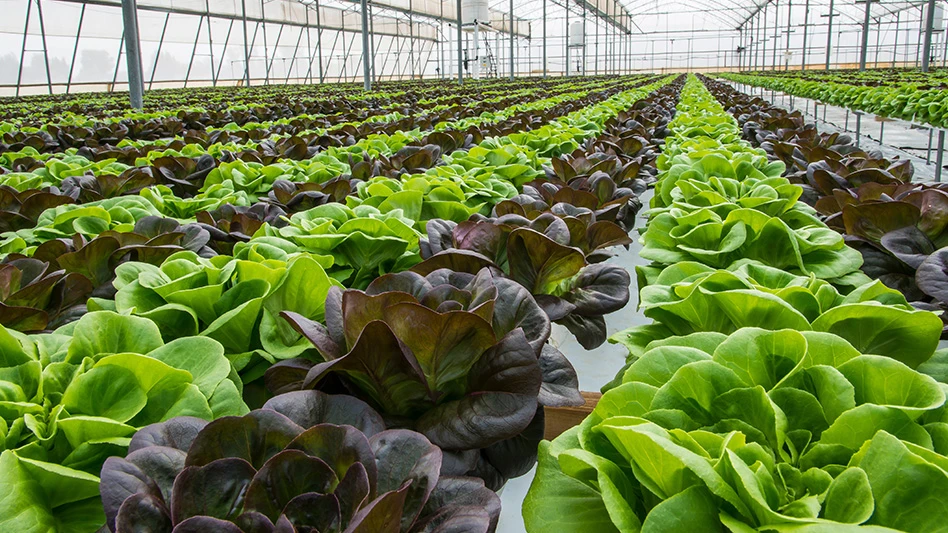
In hydroponics, nutrient film technique (NFT) has long been synonymous with leafy green production. NFT delivers a shallow stream of nutrient solution directly to plant roots in narrow channels, minimizing waste and maximizing space efficiency.
It's simple, water-efficient design made it a natural fit for crops like lettuce, basil and arugula: fast-growing, compact and low-maintenance crops that helped define NFT’s role in modern controlled environment agriculture.
But a shift is beginning. More growers are now considering NFT for more than just leafy greens. With compact fruiting crops and modest system adaptations, a broader future is emerging for NFT, one where strawberries, dwarf peppers and micro-dwarf tomatoes might find a home.
A system built for efficiency
At its core, NFT minimizes waste and maximizes space efficiency. These strengths made NFT the gold standard for crops with short cycles, shallow roots and minimal structural needs.
Yet the same simplicity that made NFT ideal for greens also historically limited its crop diversity. Fruiting crops — with higher nutrient demands, longer crop cycles, larger roots and heavier weight — were often seen as incompatible.
But with slight system tweaks, the potential is broader than once believed.

A new class of NFT crops
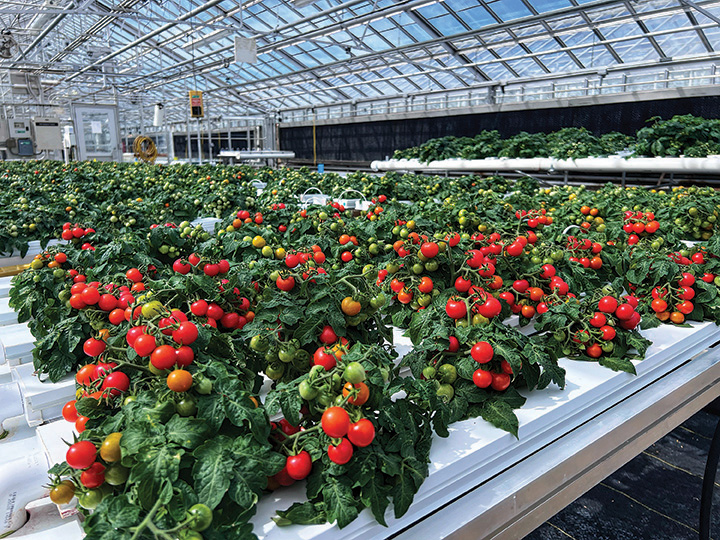
In the CEA Innovation Lab at Virginia Tech, we evaluated micro-dwarf tomato cultivars in NFT systems originally designed for leafy greens. These compact, determinate plants, bred to stay less than 30 centimeters tall, proved exceptionally well-suited to the shallow channels. Their small size, early maturity and uniform fruiting made them easy to integrate into NFT’s flow.
Unlike traditional indeterminate tomatoes, micro-dwarfs required little pruning, trellising or canopy management. Once transplanted, they grew with minimal labor beyond monitoring and harvesting. Their tendency to mature all at once allowed for batch-style harvesting, fitting naturally into the production rhythms of NFT without overextending the system.
In our trials, micro-dwarf tomatoes produced consistent yields, maintained a compact architecture and required few modifications. With the right crop selection, NFT can be far more versatile than previously imagined, offering growers a way to diversify without major infrastructure changes.
Challenges and considerations
Expanding NFT beyond leafy greens brings challenges. One vulnerability is its reliance on a recirculating nutrient solution. While efficient, this design can also facilitate rapid spread of root diseases like Pythium or Fusarium if pathogens enter the system.
A single infection can quickly move throughout the setup, making sanitation and monitoring essential.
Fruiting crops may also require slight modifications. Wider channels help accommodate increased root mass, and lightweight support structures can stabilize heavier plants. Growers must balance the benefits of diversification with the operational realities of managing more complex plant needs.

Expanding the crop palette
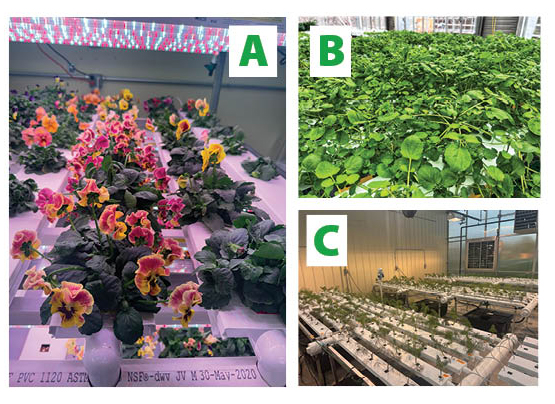
Tomatoes are just the beginning. Across the industry, growers and researchers are experimenting with strawberries, dwarf peppers, edible flowers, health-focused herbs and nutrient-dense crops like watercress in NFT systems.
At Virginia Tech, Kaylee South, assistant professor from the School of Plant and Environmental Sciences, has explored this potential, trialing edible flowers and culinary herbs in NFT systems to highlight their viability in research settings.
This flexibility offers major advantages. Growers with existing NFT setups can trial new crops without overhauling infrastructure.
Operations with limited space can diversify their offerings without increasing their footprint. Even schools and research centers are incorporating fruiting crops into NFT systems to create more engaging and diverse learning environments.
Diversifying within NFT also helps growers meet shifting market demands. Offering fruiting crops alongside leafy greens allows operations to provide a wider range of fresh produce without requiring additional growing area, which is a significant advantage in competitive local markets.
What’s next for a classic system?
The industry is already responding to NFT’s growing potential. Breeders are developing ultra-compact cultivars optimized for hydroponics, and engineers are refining channel designs to better support diverse crops.
For fruiting and specialty crops, this often means wider or deeper channels that can handle greater root volume, smoother internal profiles that reduce clogging as roots expand and stronger channel designs that tolerate increased plant weight.
In practice, this allows growers to better match channel dimensions and layout to specific crops, rather than relying on channel designs originally intended only for leafy greens. NFT is evolving from a single-purpose leafy green system into a flexible, modular platform. Growers can plug in new crops, adjust system parameters and expand their offerings without fundamentally changing the system’s core principles.
As demand for fresh local produce rises and available growing space shrinks, NFT’s space efficiency will remain a critical advantage, but its versatility may become its greatest strength. The next chapter for NFT isn’t about replacing lettuce; it’s about what else can grow beside it.
With the right cultivars, thoughtful system tweaks and close attention to system health, growers can unlock broader possibilities within familiar systems.
Innovation doesn’t always require building something entirely new. Sometimes, it starts with reimagining the tools already in hand, planting a different kind of seed and having the willingness to rethink what’s possible.

Explore the January/February 2026 Issue
Check out more from this issue and find your next story to read.
Latest from Produce Grower
- The Growth Industry podcast Episode 10: State of the Horticulture Industry
- Bimi Baby Broccoli partners with Cal-Organic Farms
- Millennium Pacific Greenhouses launches California Grown Cucumber Program
- Scientists develop vitamin A-enriched tomato to fight global deficiency
- UTIA and UT Knoxville research teams will develop automated compost monitoring system
- [WATCH] Taking root: The green industry’s guide to successful internships
- [WATCH] Advances in growing media for CEA production
- Award winners announced for 2026 PHS Philadelphia Flower Show