Photo courtesy of Koppert
Editor's Note: This article originally appeared in the January/February 2026 print edition of Produce Grower under the headline “New prospects for PepMV-free cultivation.”


The Pepino mosaic virus (PepMV) is a persistent issue that continues to cause economic damage in tomato cultivation across the world.
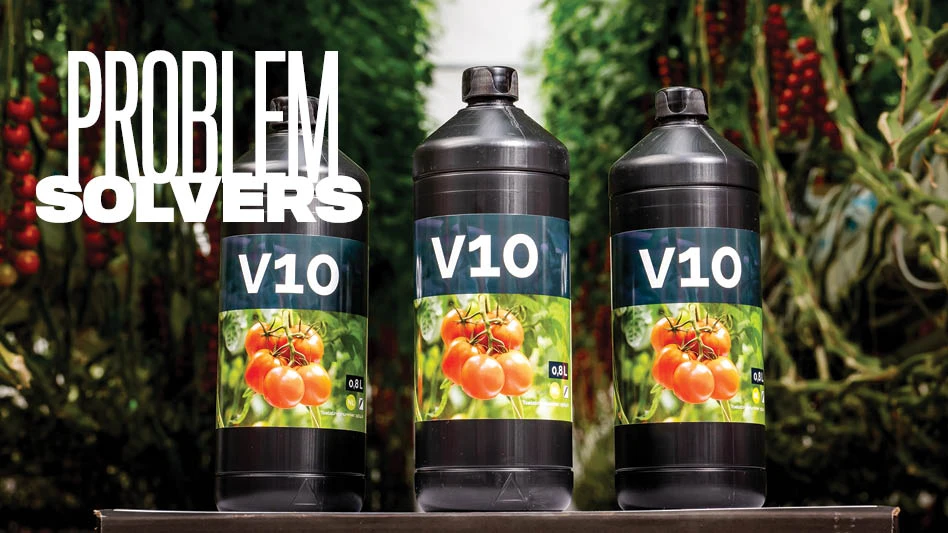
In the United States, the virus is widespread, appearing in four genetic variants and causing significant losses in both yield and quality. Until recently, growers had few tools to combat this problem. However, upcoming registration of the crop protection product V10, developed by the Dutch company Valto and available exclusively through Koppert, offers new prospects for PepMV-free cultivation.
PepMV continues to spread into more growing regions and remains a serious concern for tomato growers in many countries — especially when they lack the best possible protection against infection.
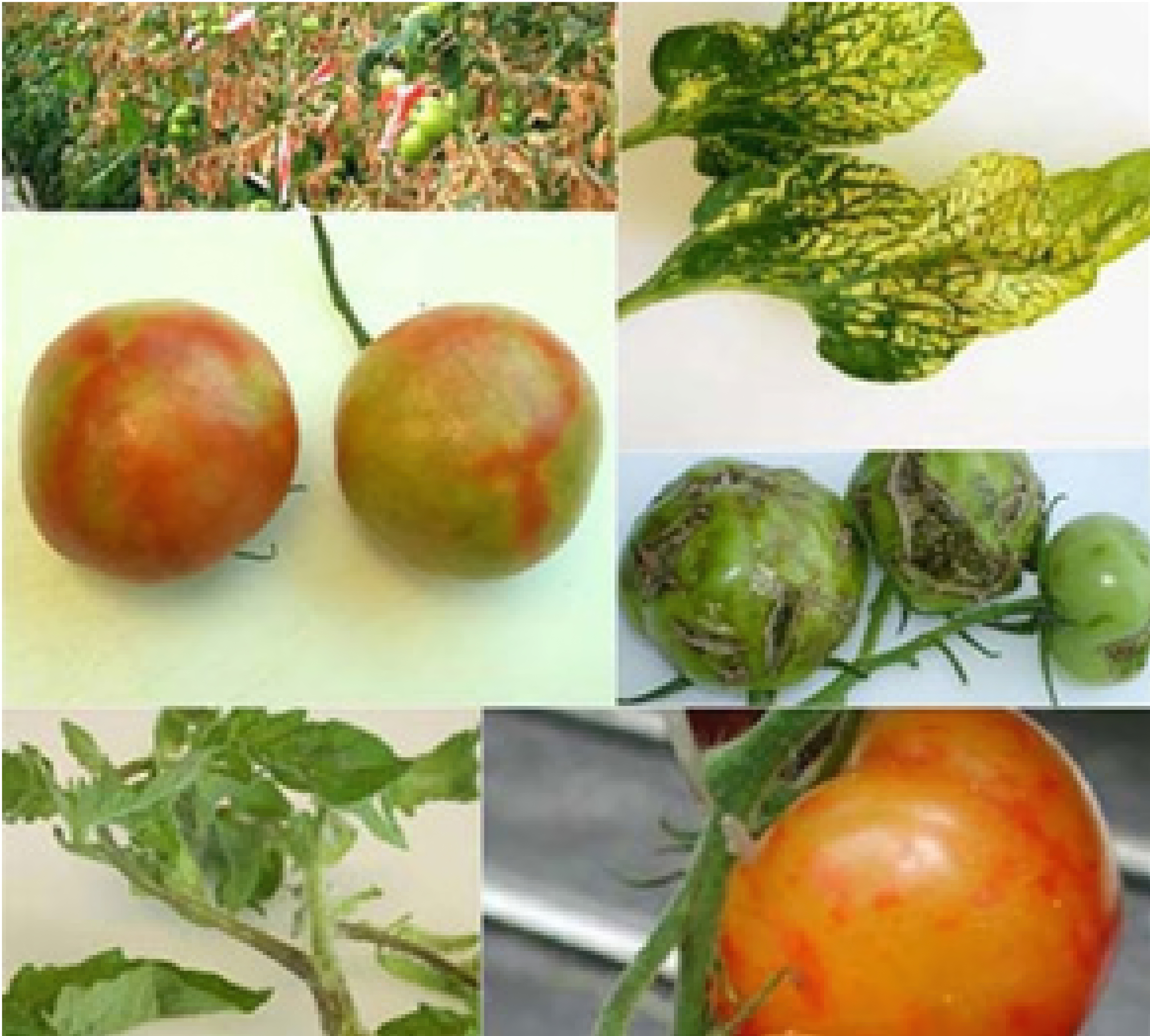
In the United States, PepMV is endemic, and all four genetic variants are present, often as mixed infections at a single site. Infections manifest through symptoms such as leaf discoloration with yellow spots, curling leaves, thin stems and malformed fruits. Due to its rapid spread in greenhouses, yield losses consistently range from 15% to 20%.
“Once the virus enters your greenhouse, it’s difficult to contain it to just the initial outbreak. Because the virus is mechanically transmissible — via hands, carts, clothing and tools — it often spreads throughout the entire facility, affecting every plant,” explains Thorben Looije, director and owner of Valto.
“In such cases, a grower must throw away the first trusses from each plant and continue cultivation until the worst is over. However, the disease tends to return later, and the plants produce softer, less storable and not tasty fruits. That is obviously undesirable.” The current standard approach to preventing infections includes frequently scouting for symptoms and enforcing strict hygiene protocols.

Approval in the U.S.
With the recent approval of V10 for the U.S. market and exclusive distribution through Koppert, American growers will have a much better chance of maintaining control and preventing infections from any of the virus variants. This puts them on a level playing field with growers in Canada (approval in 2020), Mexico (approval in 2022) and Europe.
Until now, American tomato growers have had to rely on stringent hygiene measures or products that only targeted one virus strain.
“V10 is a preventive crop protection product based on cross-protection. That means using mild, harmless virus strains to protect the plant against later infections from aggressive variants of the same pathogen,” Looije explains.
The liquid product is composed of two mild virus variants, VX1 and VC1. By vaccinating young plants with these mild strains, they are protected from the symptoms caused by aggressive variants. “With V10, we offer growers an insurance policy to stay free from PepMV,” Looije says. V10 protects against the Peruvian, Chilean and European variants.
Treatment method
The most effective method of applying the vaccine is to rub one leaf of each plant with a sponge soaked in V10. Valto advises growers to vaccinate immediately after planting a new crop. “Many growers do this on the very first day. An experienced worker can treat 1 hectare in eight to 10 hours. It’s best to complete this task all at once,” says Looije.
Traces of the vaccine remain visible for up to three weeks after treatment, making it easy to verify whether all plants were treated. With spray applications of V10, this assurance is less reliable. Both Valto and Koppert support the grower during V10 inoculation with consulting and instructional videos, ensuring efficacy and success.

Integrated disease monitoring
Growers who opt for V10 vaccination not only receive the product but also full support in PepMV monitoring throughout the entire growing season.
To verify that the plants are well protected after vaccination, samples are taken four to five weeks later and analyzed in Valto’s laboratory. These consist of leaf pieces taken from the top of the plant, collected at random throughout the greenhouse. “If, during testing, we only detect our own virus strains, then the plants are protected and healthy. Our product is preventative — it doesn’t work on existing infections,” Looije explains.
V10 development and commercialization was years in the making, and the manufacturer remains vigilant for new harmful strains. The first trials with Valto’s vaccine began in 2005, targeting the European PepMV strain. Two years later, a new strain from Chile was added.
By 2013, the V10 product was ready for commercial use and was first implemented on a large scale by Dutch tomato growers under a temporary exemption. Extensive field research had already shown that aggressive PepMV strains could not infect vaccinated plants.
Both Valto and Koppert are excited to offer this powerful and cost-effective tool for management of one of the tomato industry’s most ubiquitous and destructive viruses. Both companies strive to understand their growers’ needs and offer the most effective solutions, including the highest quality products and consulting services.
Contact your local Koppert representative today to learn more about biological pest control, and join the pre-order list to ensure you have the product on-hand for your next crop cycle.

Explore the January/February 2026 Issue
Check out more from this issue and find your next story to read.
Latest from Produce Grower
- The Growth Industry podcast Episode 10: State of the Horticulture Industry
- Bimi Baby Broccoli partners with Cal-Organic Farms
- Millennium Pacific Greenhouses launches California Grown Cucumber Program
- Scientists develop vitamin A-enriched tomato to fight global deficiency
- UTIA and UT Knoxville research teams will develop automated compost monitoring system
- [WATCH] Taking root: The green industry’s guide to successful internships
- [WATCH] Advances in growing media for CEA production
- Award winners announced for 2026 PHS Philadelphia Flower Show