Editor's Note: This article originally appeared in the November/December 2025 print edition of Produce Grower under the headline “Raise a glass (bottle).”
You’ve likely seen the memes referencing iconic '70s or '80s toys, songs or rituals that suggest if you remember it/used it/know what it is, “your back probably hurts.” As a Gen Xer, I usually appreciate the trip down memory lane.
This month’s cover story jogged my memory about soda bottles. In the early- to mid-1970s, sodas were sold in glass bottles. I remember the “clink” sound as they were bagged (almost exclusively by a teenage store employee and always in a paper sack) and my mom’s constant, “Be careful!” when I pulled one out of the fridge.
We had a crate in the garage just for empty bottles because we returned them to the store for a handful of change. Was it a nickel each? That’s where my memory is a little foggy. Mom usually gave me the change (I’m the proverbial spoiled only child), and I’d turn around and buy a pack of Smarties candy or a candy necklace. If you understand or remember these references, I hope your back doesn’t hurt!
The shift from glass to plastic bottles for soda began in earnest during the late 1970s and continued into the 1980s. I remember seeing the first plastic soda bottles on the grocery store shelf. I also remember being salty about the fact I couldn’t return it for some mad money. Cost efficiency was the driver — plastic bottles, especially those made from PET (polyethylene terephthalate), were a lot cheaper to make. They also weighed less, which meant lower shipping costs.
The convenience to consumers contributed to the rapid adoption of plastic as well. Both Coca-Cola and Pepsi invested heavily in PET technology, which allowed them to produce a lighter and more cost-effective packaging.
But there was a flip side. The rise of plastic bottles sparked real environmental concerns, leading to ongoing discussions about pollution.
This transition was not merely a change in packaging. It marked a broader shift in both consumer culture and industry practices, shaping how we enjoy our favorite fizzy drinks.
After decades of fresh produce being sold in plastic containers — in part for cost efficiency and convenience — the industry is looking for packaging material alternatives. See how some of North America’s universities are investing millions into this progression on page 8.
How do you feel about switching away from traditional plastic packaging? Drop me a note, and let’s talk about it.
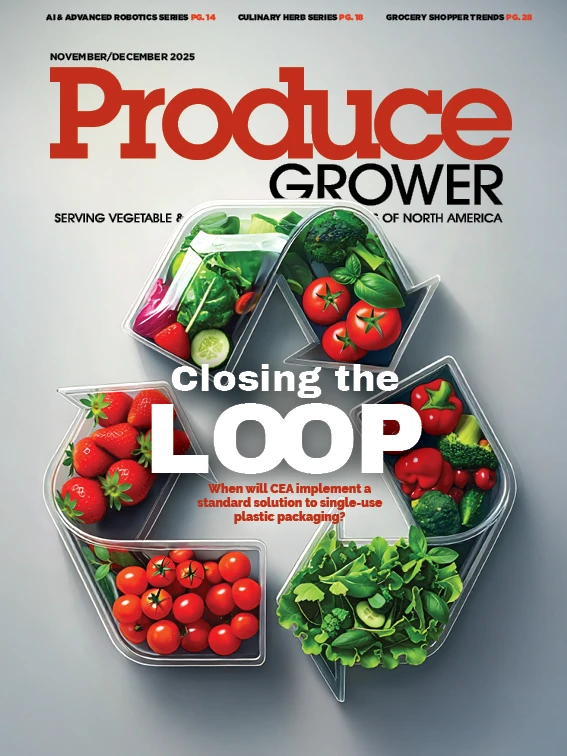
Explore the November/December 2025 Issue
Check out more from this issue and find your next story to read.
Latest from Produce Grower
- OHP expands sales team with new hire and internal promotion
- New internship data empowers horticulture employers
- Resource Innovation Institute and The Ohio State University launch first national CEA training certificate for design and construction professionals
- Farm Bill passes out of House Committee on Agriculture
- Gotham Greens celebrates 15-year anniversary in CEA industry
- [WATCH] Taking root: The green industry’s guide to successful internships
- The Growth Industry podcast Episode 10: State of the Horticulture Industry
- BM2 Automation