Photos courtesy of Prospiant
Produce Grower: Venlo greenhouses are often the top choice for commercial operators. Where do you start when working with growers to optimize the systems inside the structure?
Tony Abbas: It always starts with location and what you’re growing. Our approach focuses on obtaining precise historical information; DLI (daily light integral) and weather data. We do our due diligence, so we can leverage these natural resources to optimize crop growth and quality, focusing on OPEX.
For example, if the climate is ideal for what you are growing for part of the year, we customize the greenhouse to maximize this ideal outside air and bring it in.
PG: Crop and climate are confirmed. What’s next?
TA: The first step is to determine whether this is a single-phase project (single or multi-crop) or part of a larger multi-phase plan (again single or multi-crop).
For example, when planning the first phase of five, we work closely with the customer to “future-proof” their operation from the start. Installation of larger infrastructure in phase one would not only avoid repeating work for future phases and save associated costs but also save a significant amount of time when building the next phases.
For instance, if a hot water storage tank is built to suit only phase one needs, then the future phases would require additional storage. This cost on a per phase basis would be more expensive compared to the cost of one larger tank, let alone the land lost when we want to maximize your cultivation output.
We look at the future. Our goal is to build long-term partnerships with our customers, working together to design systems that not only meet their current needs, but also support seamless expansion and long-term sustainability.

PG: Stating from the top, what factors are important when selecting screens, vents and glazing?
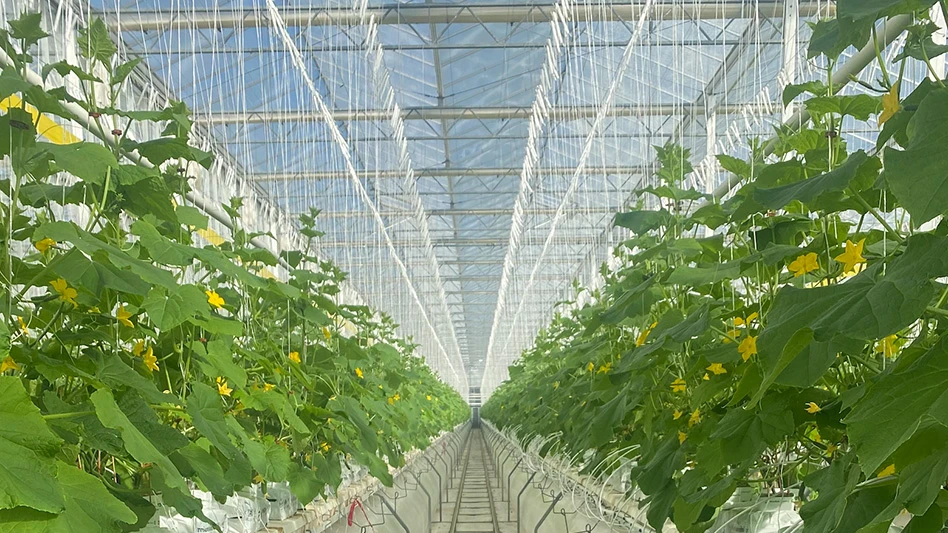
TA: Several environmental and operational factors come into play when selecting screens, vents and glazing. Venlos are generally built with alternating vents; we can also install continuous venting (vents that run the length of the bay). We would use vents to maximize environmental efficiencies.
Screening systems and materials have evolved tremendously; we can add multiple systems to assist with creating a continuous comfortable environment for specific cultivation and locations. These systems manage sunlight, abate lighting, provide shade and insulation, regulate humidity, and more.
Glazing options have increased, making selection very detailed and customizable. Location, orientation, crop, DLI as well as venting and screening are all considered when we present options. We help our customers understand their choices, highlight the differences in prices and share information about the operational costs for each. This gives our customers enough information so they can make the decision based on what they’re comfortable with.
PG: What do you see greenhouse operators struggling with that you like to address from the start?
TA: Managing climate — specifically air movement, conditioning and exchanging — is a science. It’s one of the most common challenges. That’s why we develop fully customized climate solutions based on specific crops and customer needs.
A custom solution is cheaper than most people think. We learn from our customers and educate them in return, so we can understand their needs and what they want to achieve. Then we design and give options. Are you trying to cool? Distribute CO₂? Dehumidify? Do you want to achieve a specific number of air exchanges per hour?
Regardless of the crop, air movement is extremely beneficial. We take our time with each customer because we’re often able to identify opportunities that significantly improve efficiency and reduce costs to customize the perfect solution for them.

Explore the July/August 2025 Issue
Check out more from this issue and find your next story to read.
Latest from Produce Grower
- OHP expands sales team with new hire and internal promotion
- New internship data empowers horticulture employers
- Resource Innovation Institute and The Ohio State University launch first national CEA training certificate for design and construction professionals
- Farm Bill passes out of House Committee on Agriculture
- Gotham Greens celebrates 15-year anniversary in CEA industry
- [WATCH] Taking root: The green industry’s guide to successful internships
- The Growth Industry podcast Episode 10: State of the Horticulture Industry
- BM2 Automation