Logo courtesy of CEA Alliance
The Controlled Environment Agriculture Alliance (CEA Alliance) has expressed disappointment that the U.S. Department of Commerce proceeded July 14 with withdrawing from and the termination of the Tomato Suspension Agreement with Mexico, despite multiple U.S. agriculture and business stakeholders urging renegotiation of the agreement.
By withdrawing from the agreement, there will be duties of more than 17% on most imports of tomatoes into the U.S. from Mexico, thereby increasing the costs of tomatoes in the U.S.
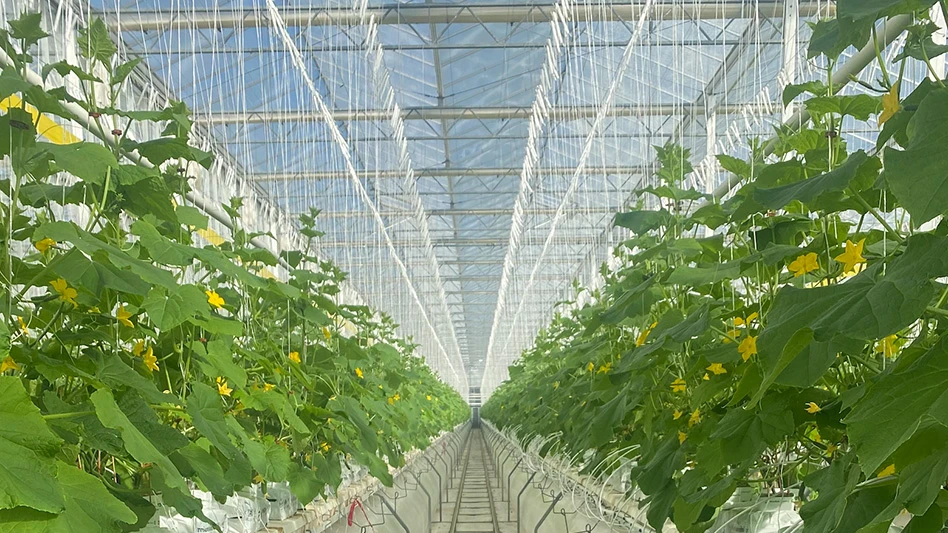
“Unfortunately, the department failed to take into account the voice of our members in the U.S. greenhouse tomato industry, which now grows more than one-third of all U.S. fresh tomatoes,” said CEA Alliance Executive Director Tom Stenzel. “When the original dumping order was issued in 1996, the greenhouse sector was just beginning to grow, offering consumers better-tasting vine-ripe tomatoes compared with field tomatoes that are picked green.”
Now that the agreement, officially called the 2019 Agreement Suspending the Antidumping Duty Investigation on Fresh Tomatoes from Mexico, is terminated, the U.S. Department of Commerce is issuing an antidumping duty order, resulting in duties of 17.09% on most imports of tomatoes from Mexico. Antidumping duties are calculated to measure the percentage by which Mexican tomatoes have been sold in the United States at unfair prices, the department said.
“Mexico remains one of our greatest allies, but for far too long our farmers have been crushed by unfair trade practices that undercut pricing on produce like tomatoes. That ends today,” said Secretary of Commerce Howard Lutnick. “This rule change is in line with President Trump’s trade policies and approach with Mexico.”
“Antidumping and countervailing duty orders provide a critical tool for U.S. industries to seek relief from the harmful effects of the unfairly priced imports, including where foreign companies sell goods in the U.S. market below production costs or below prices in their home markets,” the commerce department said in a news release.
Proponents said the import tax will help rebuild the shrinking U.S. tomato industry and ensure that produce eaten in the U.S. is also grown there, according to the Associated Press. Mexico currently supplies around 70% of the U.S. tomato market, up from 30% two decades ago, according to the Florida Tomato Exchange, the AP also said.
The U.S. Department of Agriculture reports that production of U.S.-grown greenhouse tomatoes increased 69% from 2010 to 2023, compared with a 49% decline in field-grown tomatoes.
“U.S. consumers have voted with their dollars,” Stenzel said. “Because most high-value greenhouse growers farm in Canada, the U.S. and Mexico, the termination of this agreement will cause significant damage to these growers, serving as a financial barrier to new investment in U.S. greenhouses. Unfortunately, this became a political issue that was not resolved on the facts of what would be best for American businesses and consumers.”
The CEA Alliance said it will continue to stress the critical importance of the U.S. greenhouse tomato industry.
“We remain hopeful that open-field growers will reengage in discussions that could serve all parties much more effectively than this order,” Stenzel said.
U.S. Rep. Vicente Gonzalez, (D-McAllen), Texas State Rep. Ryan Guillen (R-Rio Grande City) and Texas International Produce Association CEO and President Dante Galeazzi had hosted a press conference July 11 to request that the Department of Commerce grant a 90-day extension to continue negotiating the Tomato Suspension Agreement.
Additionally, the U.S. Chamber of Commerce sent a letter to Lutnick urging the U.S. Department of Commerce to pause the termination and negotiate a new agreement with Mexico.
"While the U.S. produces a significant amount on its own, U.S. growers and distributors must import over 2 million metric tons annually —about 90% of which comes from Mexico—to meet domestic demand," the letter states.
The letter continues:
"Terminating the Agreement would likely have widespread repercussions on the U.S. economy, affecting agriculture, warehousing, logistics, grocery, and restaurant industries. Nationwide, the import and sale of Mexican tomatoes generate an estimated $8.3 billion in economic benefits, including $4.69 billion in indirect and induced effects. U.S.-owned companies employ nearly 50,000 workers in jobs directly and indirectly supporting the movement of tomatoes from Mexico into communities across the country.
"For nearly 30 years, the suspension agreements have provided stability and certainty for growers and consumers on both sides of the border. These agreements are regularly updated to account for changing market conditions and to protect the interests of U.S. producers, businesses, and consumers — and there is no reason Commerce cannot update the Agreement rather than terminate it. But we are concerned that withdrawing from the Agreement — at a time when the business community is already navigating significant trade uncertainty — could lead to retaliatory actions by our trading partners against other commodities and crops that could create further hardship for U.S. businesses and consumers."
Latest from Produce Grower
- OHP expands sales team with new hire and internal promotion
- New internship data empowers horticulture employers
- Resource Innovation Institute and The Ohio State University launch first national CEA training certificate for design and construction professionals
- Farm Bill passes out of House Committee on Agriculture
- Gotham Greens celebrates 15-year anniversary in CEA industry
- [WATCH] Taking root: The green industry’s guide to successful internships
- The Growth Industry podcast Episode 10: State of the Horticulture Industry
- BM2 Automation