As winter approaches, the days are getting shorter and darker and colder. It’s a bad combination for growers, particularly those north of the Mason-Dixon Line. Growing healthy, full plants requires some savvy adjustments to environmental conditions.
Steve Froehlich, a Minnesota grower and consultant for CropKing, has grappled with the cold season for most of his career. When he first started his greenhouse business it was opened seasonally. Now, because of market demands, it runs year-round.
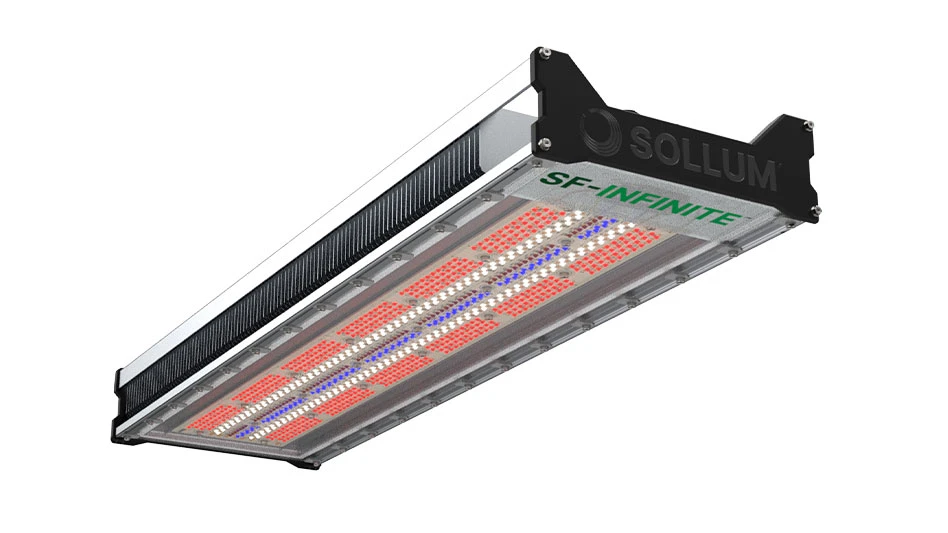
“When I first started growing tomatoes, I was a seasonal grower. We came into production in late March, early April and we came out of production around Thanksgiving. We weren’t growing in the real dark period of the year,” he says. “It’s always better if you can supply your product 365 days a year, as opposed to seasonally, so we decided to grow in the winter and light became an important part of that equation for us. There just isn’t enough light for a fruiting crop in the winter.”
Froehlich's lights are used the most in the late fall and throughout the winter. But low light levels can be a problem throughout the calendar, so, Froehlich says, every month he turns the lights on for a bit. “We do not use lights prior to the sun coming up. In other words, we would not come off a dark period and flip the lights on. We let the plants wake up with natural light. Then we turn the lights on within a half hour of the sun rising. We want to increase the overall light level in the greenhouse at that period of time,” he says.
Artificial light is not the only way Froehlich maintains his crops. He also adjusts the environmental conditions to the season. Particularly important, he says, is how a grower manages their water throughout the winter. Froehlich says that growers have a variety of tools at their disposal, including: humidity levels, light levels to a certain extent, CO2 levels and electrical conductivity (EC) levels in your solution.
Froehlich provided an example, based ontomatoes. “Let’s say we have a cloudy day and we’re approaching some of the shortest days of the year. So it’s a dark environment in the greenhouse, on that particular day. There are some things that we can do to help that plant. One is lower the overall temperature in the greenhouse. We can allow the relative humidity to be a little higher than what we normally would in that house, but you have to keep an eye out for disease issues. You have to make sure you have adequate CO2 levels in the greenhouse. Froehlich says adequate should mean at least 400 ppm of CO2. You’re probably going to raise the EC of your solution to make it harder for that plant to move water. Those are your key things to play with,” he says.
He adds that cultural practices should also be adjusted in the winter. He says, in particular, growers should watch the fruit load and leaf count on their plants.
“You don’t want to end up with a high fruit load when you’re going into a low-light condition. For tomatoes, you’re probably looking at three tomatoes per cluster. If you’re going into a really dark stretch, you may even scale it back to two tomatoes per cluster,” he says.
Pruning is also a key issue.
“Make sure you’re not letting excessive leaves grow on the plant. That contradicts what some people might think because you might believe more leaves means a greater area for photosynthesis, a greater area to collect light. But with too many leaves on there, you’ll send the message to the plant that it should go into a vegetative state instead of a reproductive state, so it will no longer reap fruit,” he says.
Following those tips and practices allowed Steve to expand his business into a year-round operation, serving customers throughout Minnesota. To succeed, Froehlich says, management of the conditions is key.
Latest from Produce Grower
- The Growth Industry Episode 10: State of the Horticulture Industry
- Bimi Baby Broccoli partners with Cal-Organic Farms
- Millennium Pacific Greenhouses launches California Grown Cucumber Program
- Scientists develop vitamin A-enriched tomato to fight global deficiency
- UTIA and UT Knoxville research teams will develop automated compost monitoring system
- [WATCH] Advances in growing media for CEA production
- [WATCH] Taking root: The green industry’s guide to successful internships
- Award winners announced for 2026 PHS Philadelphia Flower Show