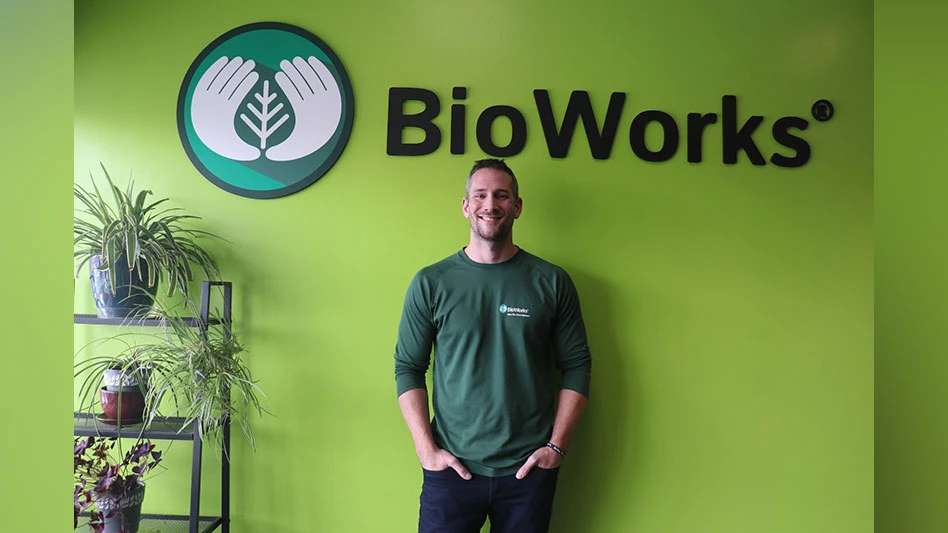
Steve Froelich, a consultant for CropKing, has seen his fair share of difficulties during his growing career. After founding his own hydroponic growing company, Froelich utilized his background in engineering and agriculture to consult for other growers. Now he travels around the nation helping companies perfect their hydroponic systems.
We spoke with Froelich about the challenges of operating a new hydroponic system.
Greenhouse Management: What are the most common issues new growers encounter when implementing a hydroponic system?
Steve Froelich: I would say the most common problems are education and system design. We can break down further issues and get into the micro stuff from those two categories.
Education is something I see as a common problem when I travel around the countryside. A lot of what I see, from a consulting basis, is that we get brought in after the fact, and a customer has already bought a facility and they have this thing up and running thinking that it will magically grow plants and they find out very early on that it’s not easy. There are skills you need to develop and be good at if you’re going to be successful as a grower.
System design is another major problem that I encounter. A lot of times a system isn’t designed for what these folks want to grow, and more importantly, the climate and environment that they’re going to have to deal with based on where their facility is at.
GM: What are some of the other issues?
SF: Environmental control systems are crucial to success. Sometimes we see nutritional problems. That comes back to who you’re dealing with as a supplier. If you’re dealing with a company like CropKing, who has the ability to make nutritional recommendations, you’re probably not going to have many problems. If you’re trying to use a generic recipe that’s not designed for your specific water and your specific crop and you’re trying to feed your crops with something you read in a book or bought off a shelf, then you’re going to have nutritional problems throughout the year.
Labor is another one we could throw in. It’s not particularly hard work but a lot of growers are struggling to find good labor. Everywhere we go, people are hiring. I see it with growers that I’ve consulted with for 20 years. They’re struggling to find good part-time help to help pick their crop.
GM: How important is the economy for new growers?
SF: The market is evolving very quickly. There’s been huge consolidation in the grocery store markets. When I first started in this industry, you could go to almost any grocery store and say “Hey, buy my product” and if it was locally grown and looked good, you could sell it. Today, with grocery store chains consolidating, produce managers come and go within the stores, so you don’t have the same friendly face to deal with every time you deliver your products.
To get into that store, you might have to do a whole district which might include 20 to 30 stores at a time. That changes the model if you’re a small, family-run operation because you may not be able to supply all those stores. So you have to think about where you’re going to sell your product. One of the plus-sides to all this, there’s a lot of farmers' markets that are popping up. Those are good places for small growers to sell their products.
GM: So what can new growers do to counter these difficulties?
SF: Choosing the company that you’re going to buy your system from is something to approach very carefully. There are a lot of greenhouse companies out there and of course they have a mission to sell you something. Choose a company that has the right people on staff that are willing to come to your site, to make recommendations and look at your facility, to customize their systems for your particular situation. Choose a company that has an engineer on staff and can make specific recommendations for your situation. Be very careful about buying stuff from the Internet or out of a catalogue. One size does not fit all.
I see a lot of growers that have jumped into this industry on a whim. They saw something on TV and said, “This is something that I need to get into.” And they jump in without doing the front-end research that’s so important in this industry.
That research takes time, money and some travel. Go to these companies, go to their grower schools, go to conferences that are out there. Mississippi State and Arizona have good conferences. Spend the money to go out there. Get yourself educated. More importantly, really take a look at what your target market might be. Draw a radius around your farm and go search out everybody that could possibly buy from you. Go talk to them. See what products they have, see if there’s a hole within what they can get and see if you can fill that hole.
Latest from Produce Grower
- The Growth Industry Episode 10: State of the Horticulture Industry
- Bimi Baby Broccoli partners with Cal-Organic Farms
- Millennium Pacific Greenhouses launches California Grown Cucumber Program
- Scientists develop vitamin A-enriched tomato to fight global deficiency
- UTIA and UT Knoxville research teams will develop automated compost monitoring system
- [WATCH] Advances in growing media for CEA production
- [WATCH] Taking root: The green industry’s guide to successful internships
- Award winners announced for 2026 PHS Philadelphia Flower Show