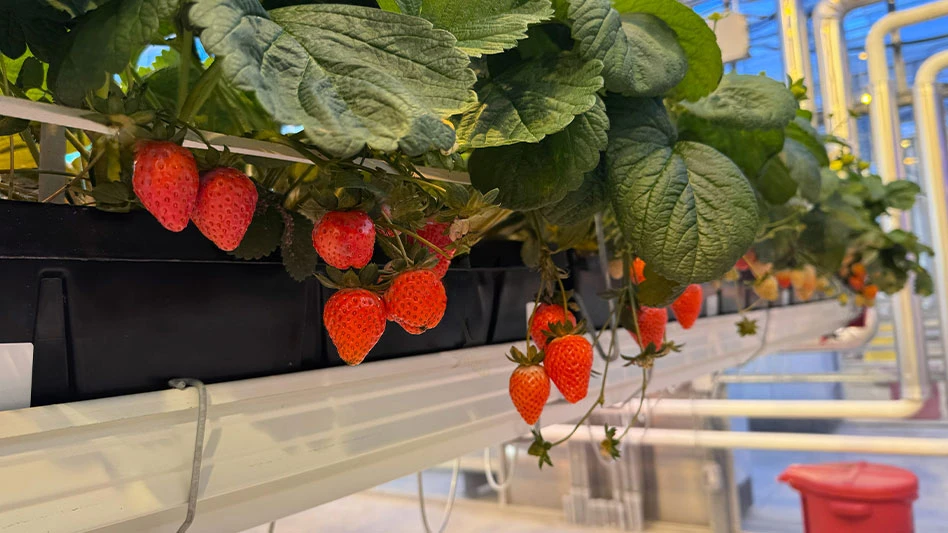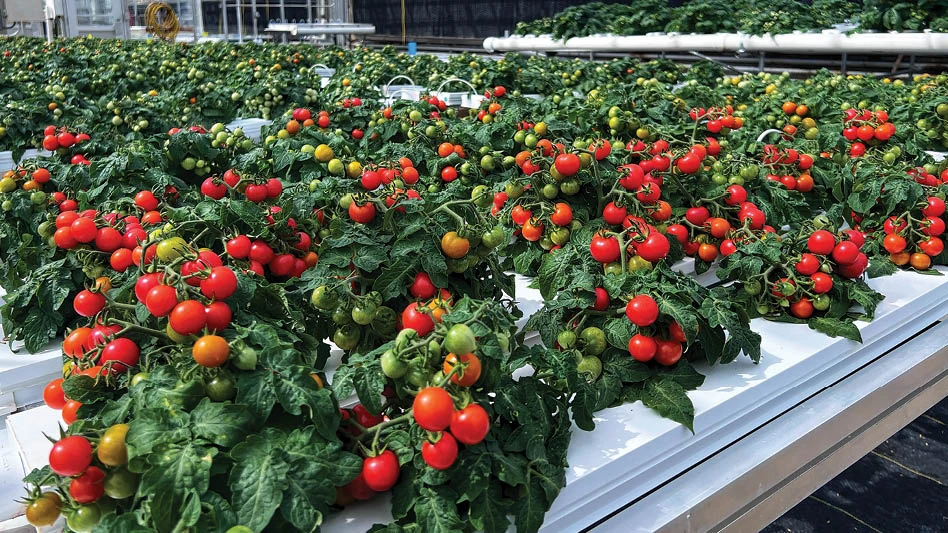
A greenhouse made from Evonik's PLEXIGLAS Alltop is providing scientists at the edge of the Antarctic with fresh vegetables, such as cucumbers and tomatoes.
The crew of the Chinese Great Wall Station can now exist without some of the supply flights from the mainland. Thanks to their own greenhouse, the first in the Antarctic, they have their own supplies of fresh tomatoes, cucumbers, bell peppers, lettuce, and various herbs.
King George Island at the edge of the Antarctic is a surreal sort of place. The island has an area of 1,150 square kilometers, more than 90 percent of which is covered by ice. The rest is coarse gravel. The island is dotted with occasional patches of lichen and grass which defy the icy temperatures and harsh winds. Penguins and seals swim in the water around the coast. But in spite of this, people actually live on the 62nd parallel south, as countries such as Chile, Russia, and China have established research stations on King George Island. At times, the icy island is home to several hundred men and women. About 300 remain even in the Antarctic winter when many scientists leave the White Continent. The Antarctic dwellers receive their supplies from ships and planes from Chile.
The crew of the Chinese Great Wall Station can now exist without some of the supply flights from the mainland. Thanks to their greenhouse, the first in the Antarctic, they have their own supplies of fresh tomatoes, cucumbers, bell peppers, lettuce, and various herbs. Among other things, this was made possible by the material PLEXIGLAS Alltop from Evonik.
To ensure that tomatoes, cucumbers and so on thrive, the construction of the first greenhouse in the Antarctic required a material that lets through the sun‘s rays, which are vital for plant growth. Because of its 91 percnt light transmission, PLEXIGLAS Alltop guarantees that the plants get sufficient natural sunlight.
To ensure that tomatoes, cucumbers and so on thrive, the construction of the first greenhouse in the Antarctic required a material that lets through the sun‘s rays, which are vital for plant growth. Because of its 91 percent light transmission, PLEXIGLAS Alltop guarantees that the plants get sufficient natural sunlight.
The Polar Research Institute of China and Shanghai Dushi Green Engineering Co., Ltd. worked on the design of the Antarctic‘s first greenhouse for two years. “Among all the materials we researched, PLEXIGLAS Alltop has proven to be most suitable as covering materials for greenhouses on extremely cold Antarctica,” says Le Lu, an engineer at Shanghai Dushi who was involved in developing the greenhouse at the Great Wall Station.
Use of material under extreme weather conditions
The problem with the design was that in the southern summer the sun shines almost all day on King George Island; at the South Pole itself, the sun shines 24 hours a day at this time of year. But even in the Antarctic summer the radiation energy is very low. This is due to what is known as the obliquity of the ecliptic, in other words, the 23.5 tilt of the earth‘s axis to the plane of its orbit around the sun. Near the pole, this causes the incidence of the sun‘s rays to be very flat and, as a result, they have little power.
Consequently, to ensure that tomatoes, cucumbers and so on thrive, the construction of the first greenhouse in the Antarctic required a material that lets through the sun‘s rays, which are vital for plant growth. After all, a rule of thumb in vegetable growing is: one percent more light results in one percent more plant growth.
The continent is regarded as the windiest on the planet. Wind force 10, in other words, severe storm, is a daily occurrence on the permanent ice. “We‘ve built many greenhouses around the world. But the project in the Antarctic was especially exciting for us,” says Weimin Wang from Evonik, who was responsible for the construction of the greenhouse in the Antarctic. “Our material can demonstrate its strength especially well under these adverse conditions.”
Latest from Produce Grower
- Fresh Express releases four new Chopped Salad Kits
- Orbia Netafim releases AI-powered Dosing 5G product range for precision fertigation
- Village Fresh Greenhouse Grown appoints Helen Aquino vice president of innovation
- Resource Innovation Institute and North Dakota State University explore co-location of data center and greenhouses
- When CapEx kills the farm
- Rethinking competition
- The National Association of State Departments of Agriculture sets 2026 federal policy focus
- 3 takeaways from Indoor Ag-Con’s ‘The State of CEA Finance’ keynote panel