.jpg) |
The time for action is yesterday, according to Craig Regelbrugge, AmericanHort senior vice president, industry advocacy and research.
Outlining the current political climate during his webinar, “Everything you need to know about immigration 2015,” he noted that every sitting president since Eisenhower has used executive authority to provide temporary immigration relief to various groups. Regelbrugge reminded attendees of a November announcement from President Barack Obama saying that he will also do what he can for immigration.
There are currently between 1.1 and 1.5 million experienced but unauthorized agricultural workers in the U.S. “And the legal program as it is struggles to admit 100,000 of them,” he said.
H-2B starts up again.
As of April 15, the Department of Labor will be allowed to process temporary labor certifications under the H-2B applications through May 15.
The federal district court in the Northern District of Florida vacated DOL’s 2008 H-2B regulations March 4 on the grounds that the DOL lacks authority to issue regulations in the H-2B program. DOL and the Department of Homeland Security (DHS) are working to publish regulations to minimize future interruptions to the H-2B program, according to DHS.
On March 16, The U.S. Departments of Labor and Homeland Security announced that they were working to issue a joint Interim Final Rule on H-2B, according to the Office of Foreign Labor Certification. They hope to have the ruling by April 30.
The DOL and DHS both are involved in processing thousands of annual applications to the H-2B program, which grants temporary visas to seasonal workers in non-agricultural industries. One of the key areas of regulation – and contention – during the past few years is the wage rates for seasonal workers.
But after a challenge from Florida Rural Legal Services, a non-profit labor rights group, the Northern Florida District Court ruled on March 4 that the Department of Labor does not have the authority to issue regulations in the H-2B program, including standards for calculating prevailing wages for seasonal workers.
The 66,000 cap is split into two portions, the first of which ended March 31. However, there will be residual delays from the recent shut down of the program by the Justice Department. And on Feb. 2, the Department of Homeland Security announced the cap for the first half of the fiscal year had been reached. Petitions received after Jan. 26 requesting a start date before April 1 were then rejected.
Deferred Action for Parents Program is in precarious position.
While DAPA is not aimed at employers, it could affect your business. Parents of a U.S. citizen or legal resident, who have been in the country for more than five years, can undergo a background check and receive a three-year relief from deportation and general work authorization.
However, a Texas judge has issued an injunction against the act and the policy could be overturned by a new president.
Since individuals must prove that they have been in the United States for five years or longer, they may need employment verification. To keep yourself out of trouble, Regelbrugge recommends putting together a policy stating that employees have a right to their employment information, no questions asked.
“The moment they tell you, you have the knowledge that they are unauthorized to work in the U.S. and it becomes a serious crime to employ someone not authorized to work in the United States,” Regelbrugge said.
There are also concerns about the number of workers who come forward as it could draw seasonal workers away from the landscaping industry and into other, more permanent employment.
Take action.
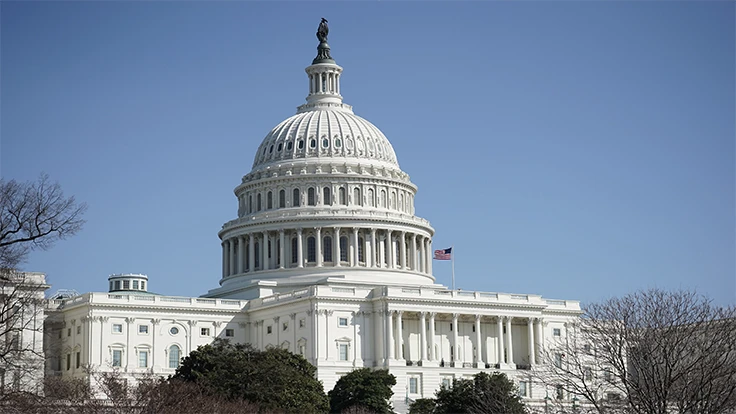
If Congress acts on immigration, Regelbrugge predicts that the House will have to do the heavy lifting this time around. “The risk for us is that there’s a real zeal – almost a blood lust – for enforcement in this Congress,” he said. “Many are arguing that they need to make the law of the land before we talk about employment needs.”
The challenge, Regelbrugge said, is to make sure that enforcement and reform move together to help prevent a shrinking employment pool.
“We won’t get a second chance if we accept a bad deal,” he said. “The job of reaching out and helping people in Congress understand is yours.”
Regelbrugge said the green industry’s best hope is to get a critical mass of Republicans to decide that the best action is to legislate, and do it wisely. The other half of the puzzle is to get Democrats to decide that finding solutions is better than riding this to the ballot box and using immigration as a wedge issue with Hispanic and other voters.
“We need to be making noise, and I know this is a challenge for our industry,” Regelbrugge said. “We know it’s go time and as spring unfolds … folks get really, really busy and it’s so hard to make the time but if members of Congress aren’t hearing from you there’s no pressure. And if there’s no pressure, there’s no action.”
What can you do?
Here’s what NALP, the National Association of Landscape Professionals, recommends:
- Call your senators and members of Congress and ask them to work with the DHS to ensure that the upcoming DHS-DOL interim final rule will not be used as an opportunity to impose burdensome new requirements on seasonal employers. You can reach your senators and representative through the congressional switchboard at 202-225-3121. Once connected to his or her office, ask to speak to the person who handles the H-2B program. If you senator or representative sent a letter to the DOL and DHS to encourage the resumption of processing, please don’t forget to say thank you and encourage him or her to keep up the fight.
- Ask your representative to co-sponsor H-2B legislation being drafted by Rep. Harris that will provide reforms to the program and end the constant litigation and uncertainty associated with the program.
- Set up a meeting locally with your senators and representative during the next two weeks when Congress is on recess. When possible, coordinate with other H-2B employers in your area.
- Come to Washington, D.C., April15 and participate in H-2B Advocacy Day. Meet with your elected officials and explain the importance of a functional and predictable H-2B program to your business. The H-2B Workforce Coalition and H-2B Providers’ Coalition are hosting this event. It will begin with a briefing for Fly-in Participants from 10 a.m. – 11 a.m. at a Congressional House Office Building on Capitol Hill – room to be announced later. Hear from congressional staff and industry experts about the key points to make with your Senators and Representatives. Receive talking points and other helpful materials. From 11 a.m. – 4 p.m. attend appointments with House and Senate Offices that you made prior to the event.
- Continue the dialogue on Twitter using the #saveH2B. Continue to direct your tweets to your senators, representatives and the DOL and DHS. Some suggested tweets are:
1. Thanks to Congress for encouraging DOL and DHS to resume H-2B processing. Please continue the fight to #saveH2B.
2. Congress keep the H-2B program operational. An interim final rule must not impose more burdens on seasonal employers. #saveH2B
3. Support legislation to reform the H-2B program and #saveH2B.
Tell your own story by tweeting pictures of your H-2B workers, your business or unused equipment if you do not have your needed H-2B workers yet to @Lawnlandscape.
Latest from Produce Grower
- The Growth Industry Episode 10: State of the Horticulture Industry
- Bimi Baby Broccoli partners with Cal-Organic Farms
- Millennium Pacific Greenhouses launches California Grown Cucumber Program
- Scientists develop vitamin A-enriched tomato to fight global deficiency
- UTIA and UT Knoxville research teams will develop automated compost monitoring system
- [WATCH] Advances in growing media for CEA production
- [WATCH] Taking root: The green industry’s guide to successful internships
- Award winners announced for 2026 PHS Philadelphia Flower Show