.jpg)
From NASA:
To watch a video of NASA astronauts growing lettuce, click here.
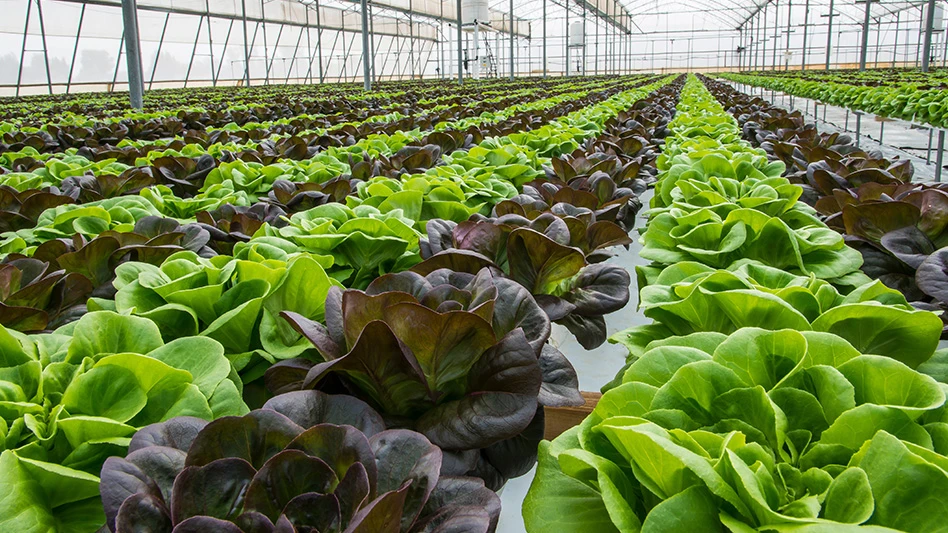
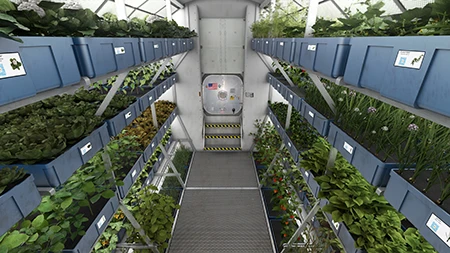
Fresh food grown in the microgravity environment of space officially is on the menu for the first time for NASA astronauts on the International Space Station. Expedition 44 crew members, including NASA's one-year astronaut Scott Kelly, are ready to sample the fruits of their labor after harvesting a crop of "Outredgeous" red romaine lettuce Monday, Aug. 10, from the Veggie plant growth system on the nation’s orbiting laboratory.
The astronauts will clean the leafy greens with citric acid-based, food safe sanitizing wipes before consuming them. They will eat half of the space bounty, setting aside the other half to be packaged and frozen on the station until it can be returned to Earth for scientific analysis.
NASA's plant experiment, called Veg-01, is being used to study the in-orbit function and performance of the plant growth facility and its rooting "pillows," which contain the seeds.
NASA is maturing Veggie technology aboard the space station to provide future pioneers with a sustainable food supplement – a critical part of NASA’s Journey to Mars. As NASA moves toward long-duration exploration missions farther into the solar system, Veggie will be a resource for crew food growth and consumption. It also could be used by astronauts for recreational gardening activities during deep space missions.
The first pillows were activated, watered and cared for by Expedition 39 flight engineer Steve Swanson in May 2014. After 33 days of growth, the plants were harvested and returned to Earth in October 2014. At NASA’s Kennedy Space Center in Florida, the plants underwent food safety analysis. The second Veg-01 plant pillows were activated by Kelly on July 8 and grew again for 33 days before being harvested. The seeds had been on the station for 15 months before being activated.
The Veggie system was developed by Orbital Technologies Corp. (ORBITEC) in Madison, Wisconsin, and tested at Kennedy before flight. Veggie, along with two sets of pillows containing the romaine seeds and one set of zinnias, was delivered to the station on the third cargo resupply mission by SpaceX in April 2014.
Experiments with space-grown lettuce started in May 2014.
To read more, visit NASA's website.
All photos courtesy of NASA.
Latest from Produce Grower
- The Growth Industry Episode 10: State of the Horticulture Industry
- Bimi Baby Broccoli partners with Cal-Organic Farms
- Millennium Pacific Greenhouses launches California Grown Cucumber Program
- Scientists develop vitamin A-enriched tomato to fight global deficiency
- UTIA and UT Knoxville research teams will develop automated compost monitoring system
- [WATCH] Advances in growing media for CEA production
- [WATCH] Taking root: The green industry’s guide to successful internships
- Award winners announced for 2026 PHS Philadelphia Flower Show