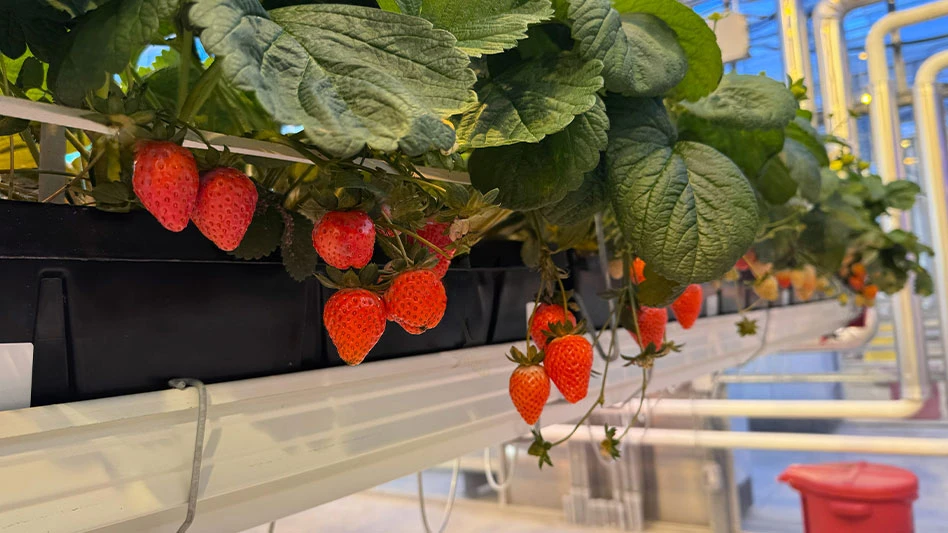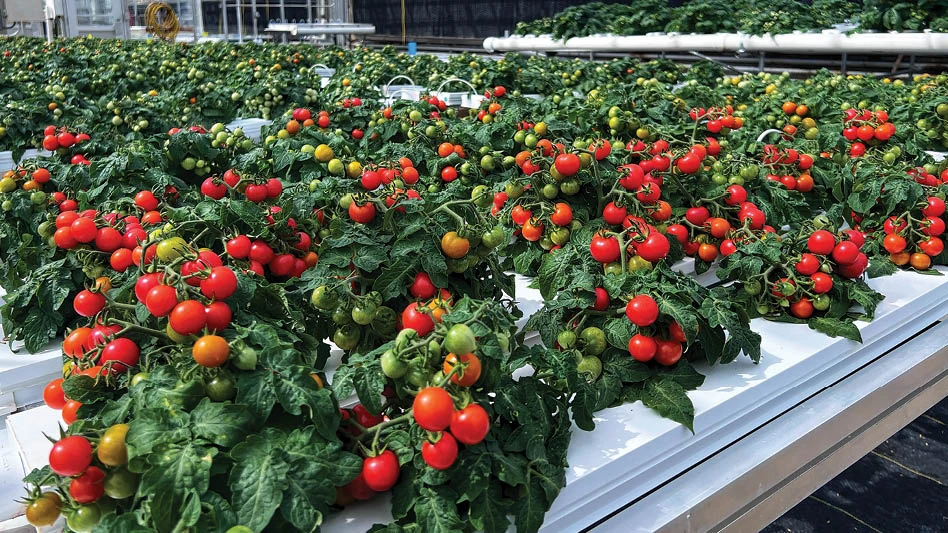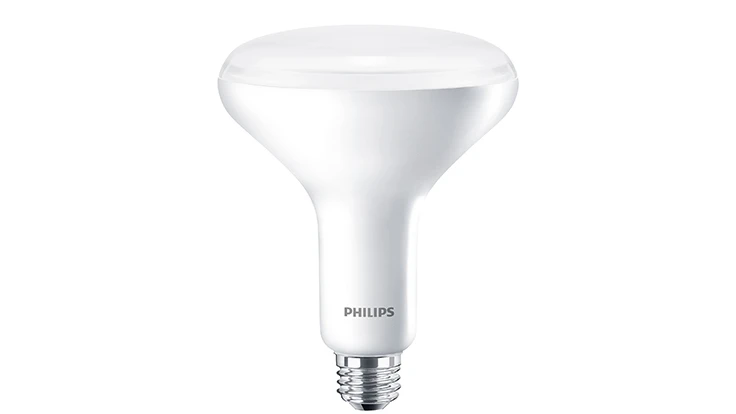
EINDHOVEN, NETHERLANDS – Philips Lighting (Euronext Amsterdam ticker: LIGHT), has announced the launch of the Philips GreenPower LED flowering lamp 2.0, an energy-efficient way to extend daylight or interrupt the night growing cycle in greenhouses for growers that cultivate strawberries, cut flowers, bedding plants and cuttings.
The new Philips GreenPower LED flowering lamp 2.0 builds on the first generation of Philips GreenPower LED flowering lamp and comes in two different spectral versions with light recipes for growing cut flowers and soft fruit. The newlamp is designed to increase the yield, quality and consistency of crops and stimulate flowering.
The next generation lamp provides an optimum spectrum and high light output and allows growers to save electricity costs by being 90-percent more energy efficient than conventional incandescent lamps. The lamps have a standard E27 or E26 fitting allowing them to be used in existing installations, avoiding unnecessary modifications and reducing set-up costs.
The Philips GreenPower LED flowering lamp 2.0 is available with two different spectral versions: one offers a combination of deep red and white (DR/W) and the other a combination of deep red/white/ far red (DR/W/FR). The DR/W light version inhibits flowering of short-day plants, and has for example been very effective with chrysanthemums. The DR/W/FR light version is ideal for photoperiodic lighting of bedding and perennials. It can extend the day or interrupt the night cycle to promote elongation of the stems of strawberries and stimulate flowering.
The Phillips Green Power LED flowering lamp 2.0 looks like an incandescent lamp, but is made of robust plastic that mitigates the risk of damage to crops that can occur from broken glass lamps. To reduce maintenance costs, the lamp is designed to last at least 25,000 hours* and is rated for IP44 and UL damp and dry conditions indoors. Trials in countries that use photoperiodic lighting to produce cuttings or cut flowers have reported that the flowering lamp is much more stable on the energy grid compared to incandescent or ”twisters” (CFLs), so there is less risk of quality issues in crop production.
“Being the first to market with a flowering lamp almost seven years ago, the Philips GreenPower LED flowering lamp 2.0 pushes the boundaries of how growers can gain control of crop quality and yield for their customers even more,” said Udo van Slooten, business leader for Philips Lighting’s Horticulture business.
Below are specifications for the North America version of the new Flowering Lamp with an E26 base:
| Spectrum | Base | Power | Photon Flux µmol/s | Efficacy µmol/J |
|
| Deep Red / White | E26 Base | 13 W | 25 µmol/s | 1.9 µmol/J | UL/CSA Approved |
| Deep Red / White Far Red | E26 Base | 11 W | 20 µmol/s | 1.8 µmol/J | UL/CSA Approved |
*Lifetime based on 90-percent light output at 25°C ambient temperature (L90B50, T25)
Latest from Produce Grower
- Fresh Express releases four new Chopped Salad Kits
- Orbia Netafim releases AI-powered Dosing 5G product range for precision fertigation
- Village Fresh Greenhouse Grown appoints Helen Aquino vice president of innovation
- Resource Innovation Institute and North Dakota State University explore co-location of data center and greenhouses
- When CapEx kills the farm
- Rethinking competition
- The National Association of State Departments of Agriculture sets 2026 federal policy focus
- 3 takeaways from Indoor Ag-Con’s ‘The State of CEA Finance’ keynote panel