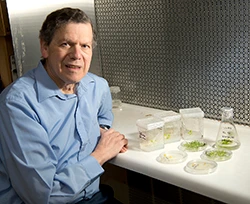
A recent discovery could lead to easier genetic modification of plant varieties considered recalcitrant to standard methods, including varieties of economically important crops. 
A Purdue University research team identified a gene that influences susceptibility to infection by Agrobacterium tumefaciens, a bacterium that is used as a tool to insert genes into plants to produce traits such as resistance to pests, diseases, or harsh environmental conditions or to improve the nutrition or shelf life of a crop.
"There is a great need for a way to genetically modify plants not only on a large scale for important cash crops but also on a small scale for research," says Stanton Gelvin, Purdue's Edwin Umbarger Distinguished Professor of Biological Sciences who led the research. "What we've discovered could lead to a way to increase a plant's susceptibility to Agrobacterium infection and open the door to its use on a much broader range of plants."
The team studied genes in Arabidopsis, a small plant related to mustard that is a common research model. The researchers identified a gene that plays a central role in susceptibility to genetic transformation and discovered the mechanism and specifics of its action. Bioinformatic analyses and gene libraries suggest this gene is also found in corn, soybeans, wheat, oilseed rape, cacao, rice and many others, but the team needs to verify this experimentally, Gelvin says.
For more information visit the Purdue University website.
Latest from Produce Grower
- [WATCH] Advances in growing media for CEA production
- [WATCH] Taking root: The green industry’s guide to successful internships
- Award winners announced for 2026 PHS Philadelphia Flower Show
- U.S. horticulture operations report $18.3 billion in sales: USDA
- Industry leaders call for action to support economic aid for specialty crops
- Sollum Technologies launches SF-INFINITE, a new LED fixture for commercial greenhouses
- ACT announces 2026 event series focused on resilience, energy, efficiency in greenhouse growing
- BioWorks appoints Chris Rose interim general manager