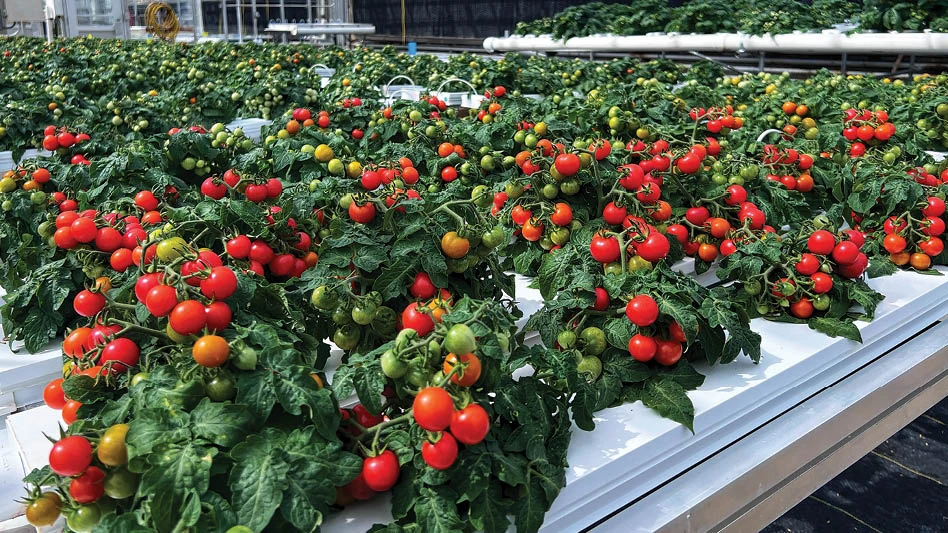
Colleagues with the South Dakota School of Mines and Technology, Princeton University and Florida Gulf Coast University are the first to develop a workable means of turning tomato waste into electricity. The development was presented at the the annual meeting of the American Chemical Society this past week.
Currently, processing tomatoes in large quantities produces a huge amount of waste that at present is destined for landfills or becomes a water contaminant.
The scientists developed a microbial electrochemical cell specific to tomato waste. The cell takes advantage of the natural lycopene pigment in tomatoes that serves as a source of electrons which are easily transferred using bacteria in a microbial electrochemical cell. The system functions at a higher level of electrical production with waste tomatoes taken directly from farming operations without any cleaning.
No treatment process specific to tomato waste exists at present but the use of tomato waste in this new process could reduce the production of methane from rotting tomatoes, making it possible for tomato growers to absorb the cost of delivering the tomato waste to a centralized location for electrical production since growers already pay to take their waste to landfills.
Photo: Dreamstime.com
Latest from Produce Grower
- Fresh Express releases four new Chopped Salad Kits
- Orbia Netafim releases AI-powered Dosing 5G product range for precision fertigation
- Village Fresh Greenhouse Grown appoints Helen Aquino vice president of innovation
- Resource Innovation Institute and North Dakota State University explore co-location of data center and greenhouses
- When CapEx kills the farm
- Rethinking competition
- The National Association of State Departments of Agriculture sets 2026 federal policy focus
- 3 takeaways from Indoor Ag-Con’s ‘The State of CEA Finance’ keynote panel