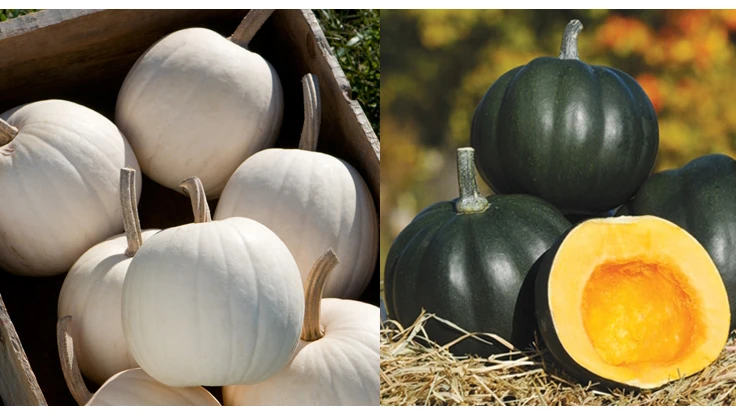
DURHAM, N.H. – Gardeners preparing to plant their fruits and vegetables will have a number of new cantaloupes, pumpkins, and acorn squash to choose from that were developed at the NH Agricultural Experiment Station at the University of New Hampshire by a researcher who represents the longest continuous squash and pumpkin breeding program in North America.
Brent Loy, emeritus professor of plant genetics, continues his ground-breaking plant breeding work as a researcher with the NH Agricultural Experiment Station, according to the release. His most recent work has resulted in the commercial release of nine new cucurbit varieties that are well suited to state and regional growing conditions, have improved yields, and exhibit disease and pest resistance. Loy and his team also have been focused on reducing farm inputs of pesticides and labor for weed control by incorporating better disease resistance into new varieties and developing varieties with a more compact and upright growth habit for better weed control through cultivation.
“Traditional breeding projects at the University of New Hampshire have been highly successful in developing new varieties of melon, ornamental pumpkin, winter squash, summer squash, and gourds which enhance the capacity of farmers to provide a diversity of produce at local markets such as roadside stands, farmers markets, and related retail markets,” Loy said.
Loy’s experiment station-funded work, which has largely taken place at the experiment station’s Kingman Farm, has resulted in more than 70 new varieties of squash, pumpkins, gourds, and melons sold in seed catalogs throughout the world, many of the varieties being joint developments with seed companies located in the Northeast.
“Development of new varieties has been a key underpinning for production of abundant and nutritious vegetables in North America. With increasing land prices and increased costs associated with inputs such as fertilizers, pesticides, and labor, improved variety performance in terms of yield, quality and ease of culture is paramount to successful farming,” he said. “Moreover, income generated by regional seed companies in producing and marketing locally adapted varieties helps maintain their profitability.”


Latest from Produce Grower
- Fresh Express releases four new Chopped Salad Kits
- Orbia Netafim releases AI-powered Dosing 5G product range for precision fertigation
- Village Fresh Greenhouse Grown appoints Helen Aquino vice president of innovation
- Resource Innovation Institute and North Dakota State University explore co-location of data center and greenhouses
- When CapEx kills the farm
- Rethinking competition
- The National Association of State Departments of Agriculture sets 2026 federal policy focus
- 3 takeaways from Indoor Ag-Con’s ‘The State of CEA Finance’ keynote panel