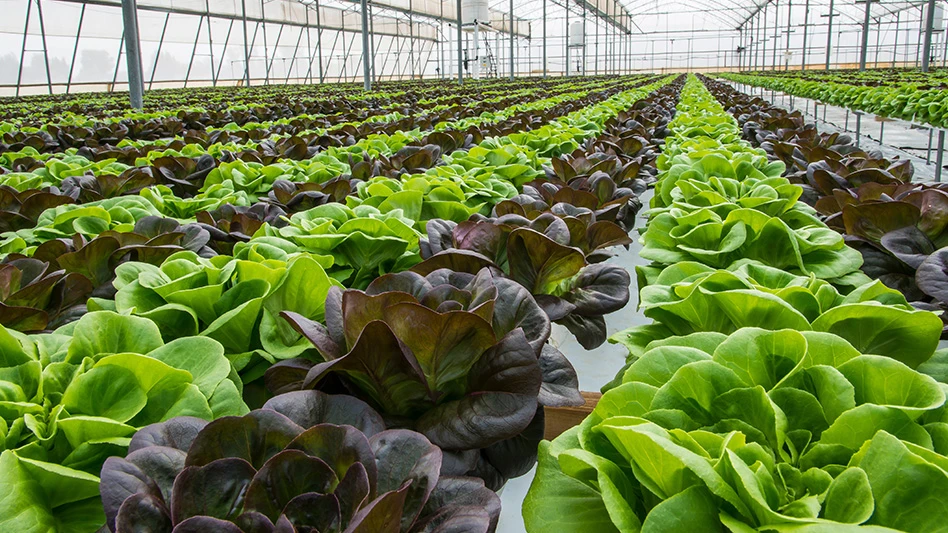
A recent study from USDA has found that American shoppers lack proper diversification at the supermarket. Nearly 60 percent of commercially available vegetables and legumes are either potatoes, tomatoes or lettuce. According to the study, "Restricting one’s diet to a limited set of vegetables precludes the desired variety that would supply more diverse, healthful nutrients."
Here's the crop-by-crop breakdown:
- White potatoes accounted for 30 percent of the 384.4 pounds per person of vegetables and legumes available in 2013.
- Tomatoes had a 22-percent share, with 20.2 pounds per person of fresh tomatoes and 65.9 pounds per person of processed tomatoes.
- Fresh lettuce (head lettuce, romaine, and leaf lettuce) rounded out the top 3 vegetables at 25.5 pounds per person—7 percent of 2013’s total vegetable and legume availability
The Center for Disease Control and Prevention's (CDC) researchers found that "adults who engage in at least 30 minutes of moderate physical activity daily should consume 1.5 to 2.0 cup equivalents of fruit and 2 to 3 cups of vegetables daily. However, during 2007–2010, half of the total U.S. population consumed <1 cup of fruit and <1.5 cups of vegetables daily; 76 percent did not meet fruit intake recommendations, and 87 percent did not meet vegetable intake recommendations."
Latest from Produce Grower
- The Growth Industry Episode 10: State of the Horticulture Industry
- Bimi Baby Broccoli partners with Cal-Organic Farms
- Millennium Pacific Greenhouses launches California Grown Cucumber Program
- Scientists develop vitamin A-enriched tomato to fight global deficiency
- UTIA and UT Knoxville research teams will develop automated compost monitoring system
- [WATCH] Advances in growing media for CEA production
- [WATCH] Taking root: The green industry’s guide to successful internships
- Award winners announced for 2026 PHS Philadelphia Flower Show